
Introduction to 5-Amino-1MQ
5-Amino-1MQ is a synthetic organic compound widely utilized in biochemical and pharmacological research. It is a quaternary ammonium salt, commonly prepared as the iodide or chloride form, with the IUPAC designation 5-amino-1-methylquinolinium. The molecular formula for the iodide salt is C₁₀H₁₁IN₂, corresponding to a molecular weight of approximately 286.11 g/mol. Structurally, the molecule consists of a quinoline core bearing a methyl group on the nitrogen and an amino substituent at the 5-position, features that are critical for its interaction with target proteins in experimental settings.
This compound is recognized in the research community for its role as a selective inhibitor of nicotinamide N-methyltransferase (NNMT), an enzyme involved in methyl-group metabolism and cellular energy homeostasis. As a research tool, 5-Amino-1MQ enables scientists to probe NNMT-related pathways in vitro and in animal models. It is typically supplied as a high-purity crystalline powder, with color ranging from off-white to pale yellow, and is soluble in polar solvents such as dimethyl sulfoxide (DMSO) or water, facilitating its use in a variety of laboratory protocols.
For investigators procuring this molecule, sourcing from a reliable 5-Amino-1MQ manufacturer in China has become an increasingly common practice. The country’s advanced chemical synthesis sector supports the consistent production of this and other specialty research chemicals, meeting the exacting demands of institutional and industrial laboratories worldwide.
Why China for 5-Amino-1MQ Manufacturing?
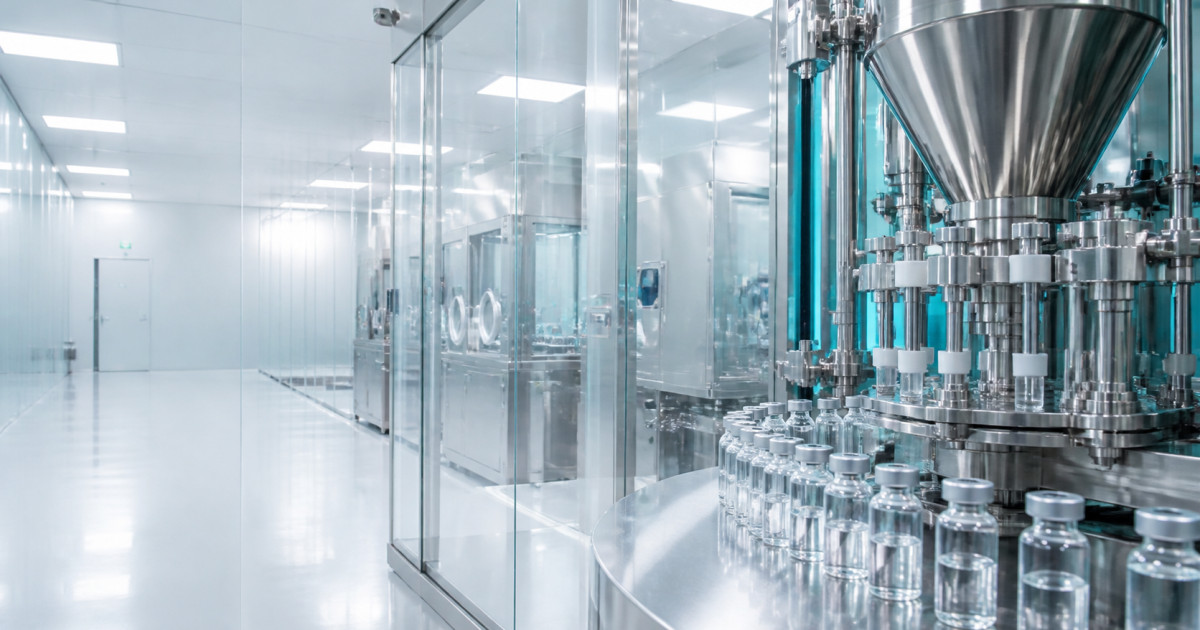
China has emerged as a central hub for the synthesis of complex organic compounds used in scientific research. Several structural advantages contribute to this position. First, the nation possesses a mature, vertically integrated chemical infrastructure. Key starting materials and intermediates for quinoline-based syntheses are readily available domestically, reducing lead times and supply-chain risk. This industrial ecosystem enables factories to scale production from gram-level batches for pilot studies to multi-kilogram quantities for distribution partners, while maintaining tight control over reaction parameters.
Cost-effectiveness is another significant factor. Competitive pricing, driven by economies of scale and efficient process chemistry, allows research institutions and pharmaceutical companies to allocate budgets more flexibly. It is critical to note that cost reduction does not inherently imply a compromise on quality. Many established Chinese producers have invested substantially in modern reactor systems, purification technologies, and analytical instrumentation to align their output with international pharmacopoeia and reference-grade standards.
Furthermore, an expanding number of facilities producing research chemicals now actively pursue and maintain certifications recognized globally. This trend is supported by frequent technical exchanges with Western partners and a culture of incremental process improvement. The result is a supplier landscape where a dedicated 5-Amino-1MQ manufacturer in China can deliver material that consistently meets predetermined specifications, documented through rigorous analytical data packages.
Industry Certifications and Compliance
When evaluating potential manufacturing partners, compliance credentials serve as a fundamental baseline. The majority of reputable Chinese producers of fine research chemicals hold ISO 9001:2015 certification for quality management systems. This standard mandates documented procedures for raw material sourcing, production, testing, and handling of non-conformities, providing a structured framework that supports reproducibility.
Adherence to current Good Manufacturing Practice (cGMP) guidelines, as outlined by bodies such as ICH Q7, is also widespread in facilities geared toward the research and pharmaceutical intermediate sectors. While cGMP for active pharmaceutical ingredients is distinct from the requirements for research-grade substances, applying its core principles—such as validated cleaning procedures, environmental monitoring, and comprehensive batch record keeping—contributes to a product of high integrity. Regular on-site audits conducted by international clients or third-party consultancies further validate these practices, ensuring that manufacturing reality matches the documented quality system.
Key Quality Indicators in 5-Amino-1MQ Production
For a research chemical, fitness for purpose is defined by a set of measurable quality attributes. Procurement specialists and principal investigators typically focus on several non-negotiable indicators when examining a product dossier.
Purity is the foremost parameter. Industry-standard specifications for 5-Amino-1MQ require a chromatographic purity of at least 98%, as determined by high-performance liquid chromatography (HPLC). Many lots exceed this threshold, reaching ≥99% area percent, which minimizes the influence of unknown impurities on experimental outcomes. Alongside organic purity, inorganic contamination must be tightly controlled. Residual solvents from synthesis and purification steps are quantified by gas chromatography, and heavy metals—such as palladium, lead, or arsenic—are analyzed against limits typically in the low parts-per-million range. Batch-to-batch consistency is non-negotiable; each production run should yield a powder with identical polymorphic form, solubility profile, and color, backed by a comprehensive certificate of analysis (CoA) that itemizes every test result.
Analytical Testing Methods
Validated analytical methods are the backbone of quality assurance. For 5-Amino-1MQ, the core techniques include:
- HPLC (High-Performance Liquid Chromatography): A reverse-phase C18 column with UV detection at a wavelength specific to the quinoline chromophore provides accurate purity assessment. Gradient or isocratic methods are developed to separate the main peak from potential process impurities or degradation products.
- Mass Spectrometry (MS) and Nuclear Magnetic Resonance (NMR): LC-MS or direct infusion MS yields the molecular ion peak, confirming molecular weight. ¹H-NMR and ¹³C-NMR spectroscopy verify the chemical structure and reveal any gross organic contamination. For a 5-Amino-1MQ manufacturer in China, supplying NMR spectra alongside HPLC chromatograms is standard practice for high-value clients.
- ICP-MS (Inductively Coupled Plasma Mass Spectrometry): This technique enables multi-element trace metal analysis with detection limits in the parts-per-billion range, ensuring that catalytic metal residues are reported with high confidence.
Selecting a 5-Amino-1MQ Manufacturer in China
Due diligence is essential to identify a supplier capable of meeting both scientific and logistic requirements. The process begins with verifying the manufacturer’s credentials. Request copies of business licenses, export registrations, and any applicable facility audit reports. A well-established firm will have dedicated production lines or segregated synthetic capacity for small-molecule research chemicals, reducing the risk of cross-contamination.
Before committing to bulk volumes, it is advisable to procure a trial sample. Review the accompanying CoA and consider having the material independently analyzed by your own laboratory or a trusted third party. This step validates not only the product quality but also the manufacturer’s analytical capability and honesty. In parallel, evaluate practical supply chain factors: typical lead times from order to dispatch, packaging integrity for international transit, and temperature-controlled shipping options. For a moisture- or light-sensitive powder, packaging that includes vacuum-sealed, foil-laminated bags under inert gas is a strong indicator of a professional supplier.
Communication and Customer Support
Effective technical communication is a hallmark of a trustworthy 5-Amino-1MQ manufacturer in China. The initial inquiry phase should yield clear, well-organized documentation, including a product data sheet and an up‑to‑date safety data sheet (SDS) that complies with GHS classification. During negotiations, assess the manufacturer’s willingness to accommodate special requests, such as custom packaging sizes, alternative salt forms, or synthesis of structural analogs. After a purchase, responsive after-sales support is critical: should any analytical question or logistic discrepancy arise, a reliable supplier will engage promptly and transparently, often drawing on in-house R&D expertise to resolve technical issues.
Research Applications of 5-Amino-1MQ
In the laboratory, 5-Amino-1MQ serves as a versatile molecular probe. A primary application involves the study of cellular metabolism, where researchers use the compound to inhibit NNMT activity and observe downstream changes in nicotinamide, S-adenosyl methionine (SAM), and other methyl donors. These investigations are conducted in cultured cell lines or tissue homogenates and are fundamental to understanding metabolic regulation.
Additionally, the molecule is employed as an analytical reference standard. Its well-characterized chromatographic retention time and spectral signature allow analytical chemists to calibrate instruments or validate methods for detecting related substances. In preclinical research using animal models, 5-Amino-1MQ is applied experimentally to characterize the biochemical and physiological roles of NNMT; all such studies are performed strictly in research contexts and are not intended to imply any diagnostic or therapeutic application in humans. The compound remains a valuable biochemical tool for advancing fundamental knowledge of methyltransferase biology.
Quality Control and Certifications
At a well-managed manufacturing site, quality control is integrated into every stage of production. Incoming raw materials are quarantined and tested against identity and purity specifications before release. During the synthetic sequence, in-process checks—such as thin-layer chromatography or HPLC monitoring—verify that each step proceeds to completion. The final crude product is purified, typically by recrystallization, and then subjected to the full battery of analytical tests before a CoA is issued.
Stability studies are conducted to define the shelf life and recommended storage conditions. Accelerated testing at elevated temperature and humidity provides predictive data, while real-time stability samples are monitored over the product’s intended life span. The documentation pack delivered with a shipment generally includes the CoA, which summarizes test results; an SDS outlining safe handling procedures; and, when required, a certificate of origin. This trio of documents forms the minimum evidence of a professionally managed quality system.
Packaging and Storage
To preserve the integrity of 5-Amino-1MQ during transit and storage, manufacturers employ protective packaging. The compound is typically filled into glass vials or multi-layer aluminum foil bags that provide a hermetic seal and block ambient light. For oxygen-sensitive materials, vials may be overlaid with nitrogen or argon. The storage recommendation is −20°C in a dry, dark environment; under these conditions, the assigned shelf life usually ranges from 12 to 24 months. Researchers are advised to aliquot the compound upon first opening to avoid repeated freeze–thaw cycles and to minimize exposure to atmospheric moisture.
Frequently Asked Questions
What is the typical purity range for 5-Amino-1MQ from Chinese manufacturers?
The benchmark specification is ≥98% purity by HPLC. Many experienced suppliers routinely deliver material with a chromatographic purity of 99% or higher. Always review the CoA for the specific batch, as minor variations can occur based on synthesis route and purification method.
How can I verify the authenticity of a certificate of analysis?
The most direct method is to repeat key analytical tests—such as HPLC purity and MS identity—in your own facility or through an independent contract laboratory. Additionally, requesting a sample and comparing its data against the CoA builds confidence. A cooperative manufacturer will have no objection to such verification.
What is the minimum order quantity (MOQ) for research-grade 5-Amino-1MQ?
MOQs vary widely among manufacturers. Some suppliers offer trial quantities as small as 1 gram for initial evaluation, while others may set the minimum at 10 grams or more for custom synthesis projects. It is advisable to discuss your specific needs directly with the 5-Amino-1MQ manufacturer in China you are considering.
Conclusion
Sourcing 5-Amino-1MQ from a Chinese manufacturer presents a pragmatic combination of competitive cost structure and dependable quality, provided that selection is guided by strict due diligence. The key is to prioritize vendors who demonstrate an unambiguous commitment to analytical transparency, regulatory compliance, and responsive technical service. By requesting full documentation, evaluating trial samples, and verifying certifications, research procurement teams can secure a supply chain that consistently supports their experimental programs.
For inquiries regarding bulk availability, custom specifications, or to request a sample of research-grade 5-Amino-1MQ, we invite you to contact our team. We are prepared to discuss your specific supply requirements and provide the necessary technical documentation.
Research use only note: All chemical products described herein are intended solely for laboratory research purposes. They are not manufactured, labeled, or represented as suitable for human or veterinary clinical use, food, drug, or household applications. Purchasers must ensure that their acquisition, handling, and application of these materials comply with all relevant local, national, and international regulations.
For research use only. Not for human or veterinary use.