
Exosomes & Extracellular Vesicles
Nature's nanoscale messengers. We supply high-purity exosome preparations for research, regenerative science, and advanced delivery applications — characterized, verified, and consistent batch after batch.
What Are Exosomes?
Exosomes are nanoscale extracellular vesicles that cells use to communicate with one another.
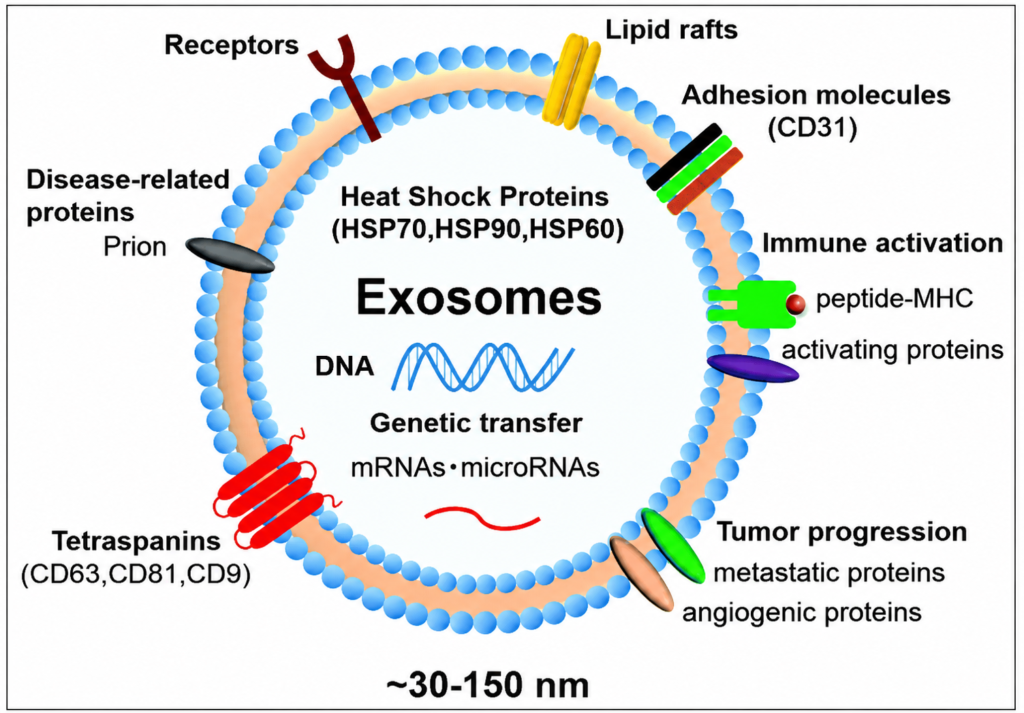
Typically 30–150 nanometers in diameter, exosomes are secreted by virtually every cell type in the body. Each vesicle is enclosed in a lipid bilayer membrane and carries a molecular payload — proteins, lipids, mRNA, and microRNA — that reflects the cell it originated from. Because they are naturally produced, highly biocompatible, and able to cross biological barriers, they have become one of the most actively studied tools in regenerative science, targeted delivery, and diagnostics.
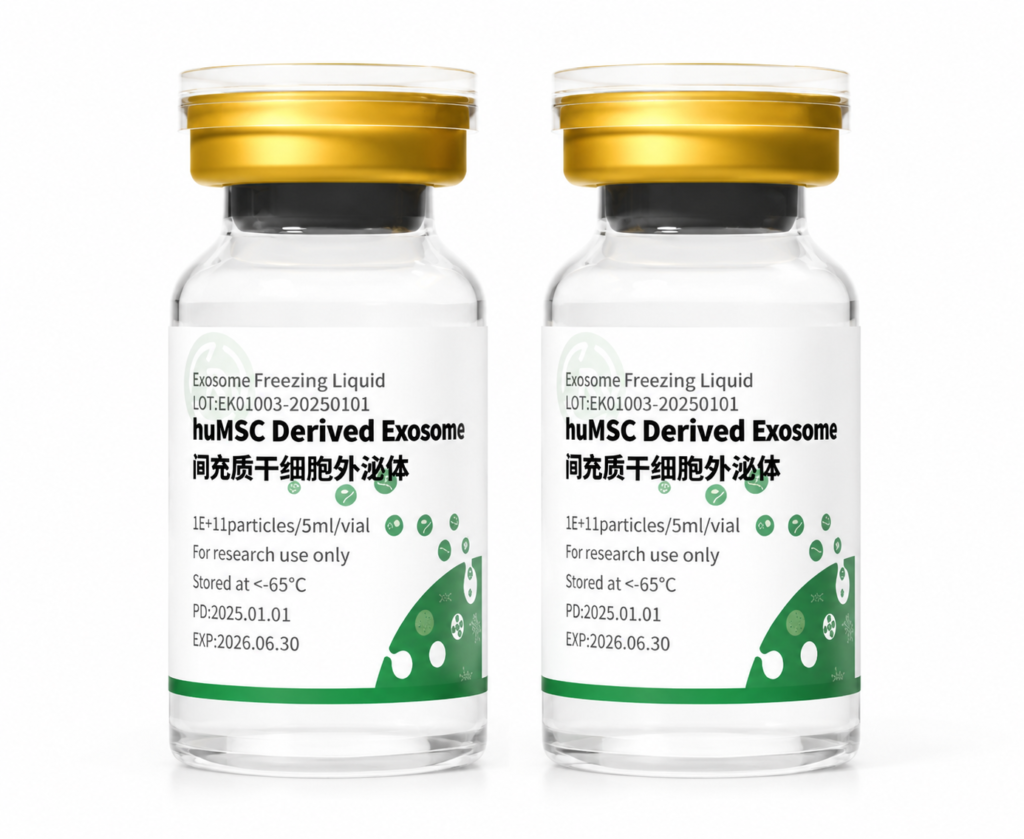
Our exosomes are supplied as a freeze-dried (lyophilized) powder and kept frozen at −80°C. In powder form they are far more stable than liquid preparations — easy to ship, simple to store, and reconstituted in your own buffer only when needed.
Inside an Exosome
A single exosome is a sophisticated package. Each component plays a distinct role in protecting and delivering its biological cargo.
Lipid Bilayer Membrane
A protective double-layered shell, derived from the parent cell, that shields the internal cargo from degradation.
Surface Proteins (Tetraspanins)
Marker proteins such as CD9, CD63, and CD81 enable recognition, targeting, and uptake by recipient cells.
Nucleic Acid Cargo
mRNA, microRNA, and other RNA species that can influence gene expression in the cells that receive them.
Functional Proteins & Lipids
Enzymes, growth factors, and bioactive lipids that carry the functional signal of the originating cell.
Why Exosomes Matter
Four properties make exosomes uniquely valuable across research and applied science.
Intercellular Communication
Exosomes act as biological couriers, transferring signaling molecules between cells to coordinate processes across tissues and organs.
- Carries proteins, mRNA & miRNA
- Reflects parent-cell signature
- Modulates recipient-cell behavior
Natural Biocompatibility
As vesicles produced by the body's own cells, exosomes are low-immunogenic and well tolerated by biological systems.
- Cell-derived lipid bilayer
- Minimal immune response
- Non-toxic, non-replicating
Targeted Cargo Delivery
Surface proteins allow exosomes to home in on specific cell types and cross barriers that limit conventional carriers.
- Crosses biological barriers
- Tunable surface targeting
- Protects cargo in transit
Structural Stability
The lipid membrane shields contents from enzymatic breakdown, supporting reliable storage, transport, and reproducibility.
- Stable as a frozen powder
- Resistant to enzymatic breakdown
- Scalable, reproducible batches
Exosomes vs. Other Carriers
How exosomes differ from conventional peptides and synthetic liposomes across the properties that matter most.
| Property |
Our Product
Exosomes
Extracellular vesicles
|
Conventional Peptides
Synthetic molecules
|
Synthetic Liposomes
Lab-assembled vesicles
|
|---|---|---|---|
| Origin | Naturally secreted by living cells | Chemically synthesized in the lab | Artificially assembled from lipids |
| Typical Size | 30–150 nm | < 5 nm (single molecule) | 50–200 nm, less uniform |
| Cargo | Complex — proteins, lipids, mRNA & miRNA together | A single defined sequence | Externally loaded, limited complexity |
| Biocompatibility | High — endogenous, low-immunogenic | Variable, depends on sequence | Moderate — can trigger a response |
| Targeting Ability | Intrinsic, via native surface proteins | Limited intrinsic targeting | Requires added engineering |
| Barrier Crossing | Native ability to cross biological barriers | Generally limited | Variable, formulation-dependent |
| Stability | High — membrane-protected cargo | Sensitive to enzymatic degradation | Prone to aggregation & cargo leakage |
Comparison provided for general educational reference. Exact properties vary by source, preparation, and application.
From Source to Verified Product
Every exosome preparation moves through a controlled four-stage process before it reaches you.
Sourcing
Exosomes are collected from carefully selected, quality-screened cell cultures grown under controlled conditions.
Isolation
Ultracentrifugation and size-exclusion chromatography separate intact vesicles from the surrounding medium.
Purification
Additional filtration removes contaminants and concentrates the exosomes to consistent research-grade purity.
Characterization
Each batch is verified for particle size, concentration, and surface-marker profile, then documented in a CoA.
Where Exosomes Are Used
Exosome science spans regenerative research, delivery systems, skin science, and diagnostics — a rapidly growing field across the life sciences.
Regenerative Research
Studied for their role in tissue repair, cell signaling, and recovery processes across multiple research models.
Drug & Cargo Delivery
Explored as natural nanocarriers able to transport therapeutic molecules to specific target cells.
Skin & Cosmetic Science
Applied in advanced formulations focused on skin renewal, barrier support, and visible-care research.
Diagnostic Biomarkers
Their molecular cargo offers a non-invasive window into cellular state for biomarker discovery.

What the Data Shows
Representative characterization figures from our exosome preparations. Upload your own study figures and conclusions in the Page Editor.
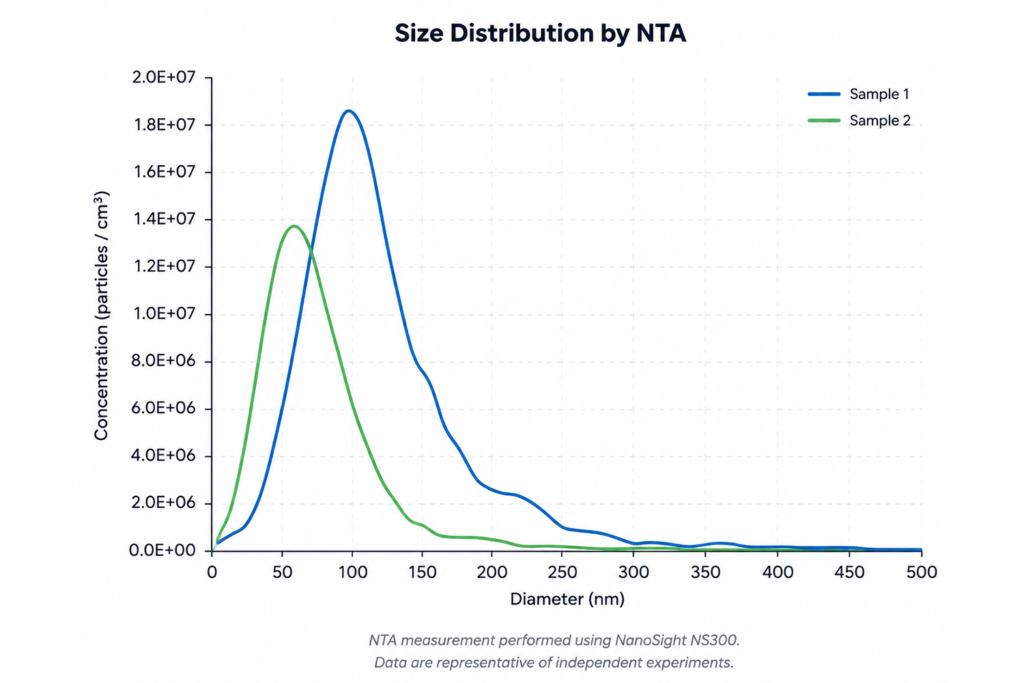
Size Distribution Profile
Nanoparticle tracking analysis shows a vesicle population concentrated in the expected 30–150 nm exosome range, with a consistent modal size across preparations.
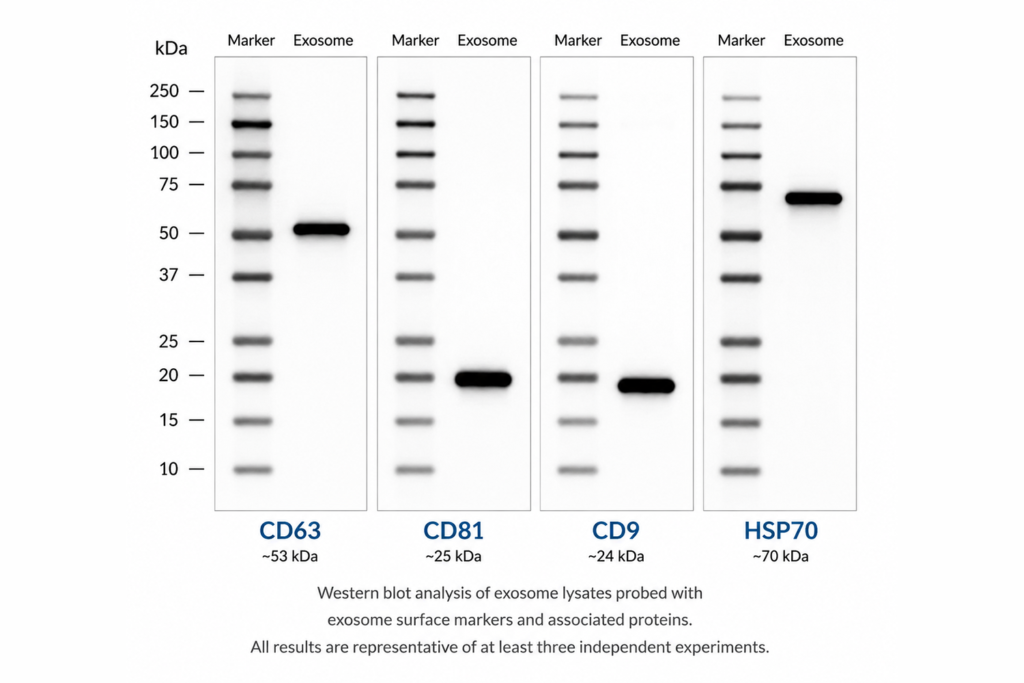
Tetraspanin Marker Expression
Western blot and flow cytometry confirm the presence of canonical exosome surface markers CD9, CD63, and CD81, supporting vesicle identity and purity.
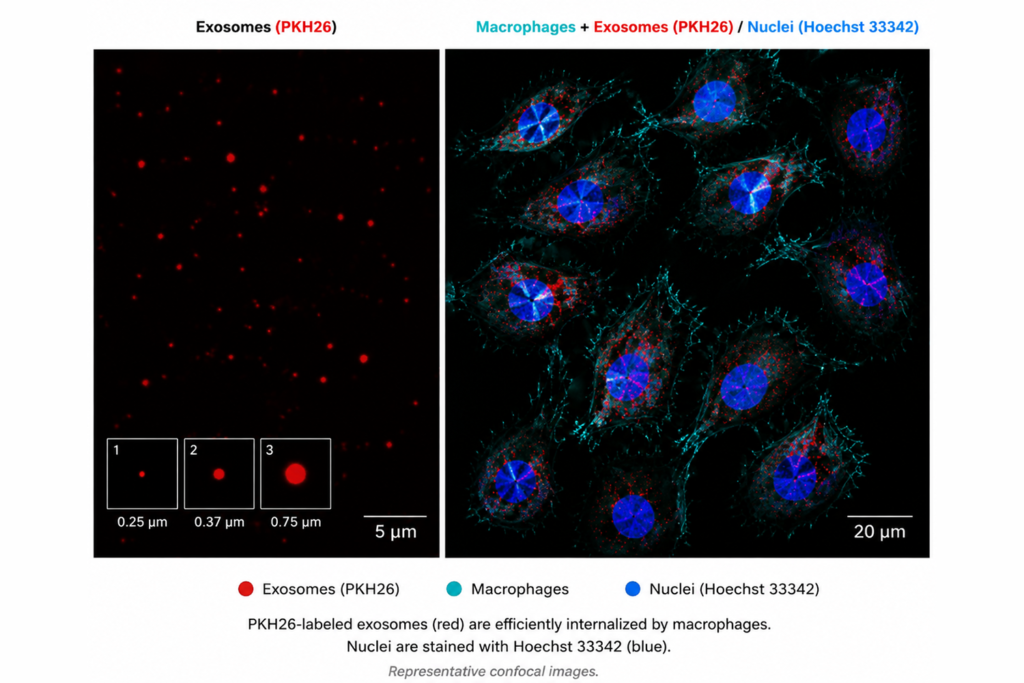
Uptake by Recipient Cells
Fluorescence imaging of labelled exosomes demonstrates internalization by recipient cells, illustrating their role as functional carriers in intercellular transfer.
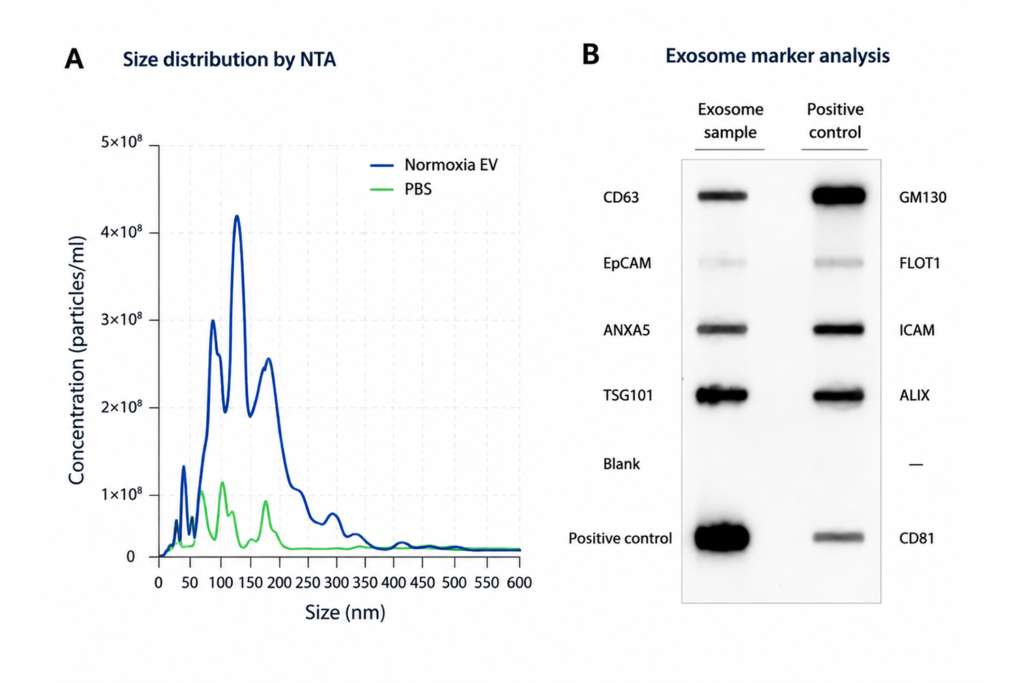
Batch-to-Batch Consistency
Particle concentration and purity metrics remain within a tight range across independent production batches, supporting reproducible research results.
Figures shown are representative and for educational reference. Replace with your own study data in the Page Editor.
Quality You Can Verify
Representative specifications for our standard exosome preparations. Custom specifications are available on request.
Exosome Products & Services
From catalog research-grade exosomes to custom isolation and bulk supply — choose the option that fits your program.
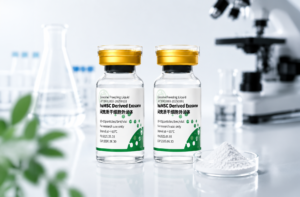
Research-Grade Exosomes
Our standard catalog exosomes — purity-verified, characterized, and supplied as a frozen powder with a full Certificate of Analysis.
Browse Catalog
Custom-Isolated Exosomes
Exosomes isolated from a specified cell source to your concentration and characterization requirements, for specialized research programs.
Request Custom Quote
Bulk Exosome Supply
Large-quantity, batch-consistent exosome supply for ongoing or scaled research, backed by reliable cold-chain logistics.
Discuss Bulk OrderExosome FAQ
Answers to the questions we hear most often from research customers.
Trusted Exosome Supply
Consistent quality and global reach for research customers worldwide.
Request Exosome Information
Tell us what you need — specifications, custom preparations, or bulk supply. Our team typically replies within one business day.
Send Us an Inquiry
Fields marked with * are required.