Overview of GHRP-6 for Laboratory Research
GHRP-6, or Growth Hormone Releasing Peptide-6, is a synthetic hexapeptide classified within the growth hormone secretagogue family. It consists of six amino acids and is structurally designed to mimic certain actions of ghrelin, the endogenous ligand for the growth hormone secretagogue receptor (GHS-R1a). In controlled laboratory settings, researchers employ GHRP-6 to investigate the physiological pathways that control growth hormone release from the anterior pituitary. As a tool compound, it supports in vitro cell-based assays and in vivo animal model studies without crossing into clinical or diagnostic contexts.
This peptide is typically supplied as a sterile, lyophilized powder intended for reconstitution in an appropriate research buffer. Its widespread use in academic and pharmaceutical laboratories stems from its well-characterized interaction with the ghrelin receptor and its ability to provoke measurable responses in cellular signaling experiments. Institutions that plan to buy GHRP-6 bulk wholesale often do so to secure consistent material for long-term, multi‑phase studies. Strict adherence to laboratory safety protocols and local regulations is essential at every stage from procurement to final data analysis.
Chemical and Structural Properties
GHRP-6 possesses a defined chemical identity with the molecular formula C46H56N12O6 and a molecular weight of 873.0 grams per mole. Its amino acid sequence is His-D-Trp-Ala-Trp-D-Phe-Lys-NH2, where the D‑enantiomers of tryptophan and phenylalanine contribute to metabolic stability and receptor selectivity. The C‑terminal amidation (‑NH2) further enhances resistance to enzymatic degradation under experimental conditions.
Standard research‑grade GHRP-6 undergoes rigorous analytical characterization. High‑performance liquid chromatography (HPLC) confirms purity at ≥98%, while mass spectrometry verifies molecular mass and sequence integrity. A detailed certificate of analysis accompanies each lot, documenting these metrics alongside peptide content and any residual counterions. Such transparency allows researchers to correlate biological observations directly with the tested material, an important factor when sourcing peptides for reproducible studies.
Solubility and Storage Recommendations
GHRP-6 readily dissolves in several common laboratory solvents. Deionized water, phosphate‑buffered saline (PBS), and dilute acetic acid (typically 0.1% v/v) all support reconstitution at concentrations up to 10 mg/mL. The choice of solvent depends on the experimental protocol; for example, PBS is frequently used when subsequent cell culture assays require isotonic conditions. Sonication or gentle vortexing may assist complete dissolution, especially at higher concentrations.
To preserve structural fidelity, the lyophilized powder should be stored at -20°C in a desiccated, light‑protected environment. Once reconstituted, the working solution remains stable for approximately one month when kept at 2–8°C and handled aseptically. Repeated freeze‑thaw cycles can promote aggregation and loss of bioactivity, so researchers are advised to aliquot the solution into single‑use volumes immediately after reconstitution. Documented handling practices ensure consistency across experimental replicates.
Research Applications of GHRP-6
GHRP-6 is embedded in a broad spectrum of preclinical investigations. In pituitary cell cultures, it serves as a stimulus to study acute growth hormone secretion dynamics and the desensitization patterns of the GHS‑R1a receptor. Dose‑response experiments in these models help delineate intracellular calcium mobilization and the activation of phospholipase C signaling pathways. Such data contribute to the fundamental understanding of neuroendocrine control mechanisms.
In whole‑animal research, GHRP-6 is administered to rodent models to examine the interplay between growth hormone pulses, insulin‑like growth factor‑1 (IGF‑1) synthesis, and appetite regulation. Transgenic and knockout lines expressing altered ghrelin receptors further enable dissection of receptor‑specific signaling. Additionally, binding competition assays using labeled ghrelin analogues allow mapping of ligand‑receptor interactions at the molecular level. All outcomes remain strictly within the domain of laboratory exploration, devoid of any implication for human or veterinary application.
Considerations for Bulk Purchasing
Institutions that regularly incorporate GHRP-6 into their pipelines often opt to buy GHRP-6 bulk wholesale, securing amounts that range from 100 milligrams to 100 grams. Larger custom quantities are usually available upon request, subject to manufacturing schedules. Volume‑based pricing models typically reduce the per‑milligram cost, making this approach economical for ongoing studies. Because lead time can extend with order size, planning ahead helps maintain uninterrupted research workflows.
All bulk shipments include a certificate of analysis and a safety data sheet explicitly marked for laboratory research use. Buyers receive documentation that traces each lot back to the original synthesis run, facilitating audit trails and method validation. It is the responsibility of the purchasing organization to verify that the intended use falls within the supplier’s terms and all applicable local, national, and international regulations.
Quality and Purity Assurance
Each batch of GHRP-6 is subjected to orthogonal analytical methods. Reversed‑phase HPLC quantifies relative purity, while electrospray ionization mass spectrometry (ESI‑MS) confirms the observed mass matches the theoretical value. Additional tests such as amino acid analysis and Karl Fischer titration may be employed to determine net peptide content and residual moisture. These data points are summarized in the certificate of analysis and can be provided in full detail upon request.
For bulk purchases, independent third‑party testing is a common practice to verify in‑house quality declarations. Researchers are encouraged to request representative chromatograms and spectra before finalizing a transaction. Clearly defined specifications—including acceptance criteria for purity and peptide content—help ensure that the material will perform consistently in sensitive receptor‑binding or cell‑based assays.
Packaging and Handling
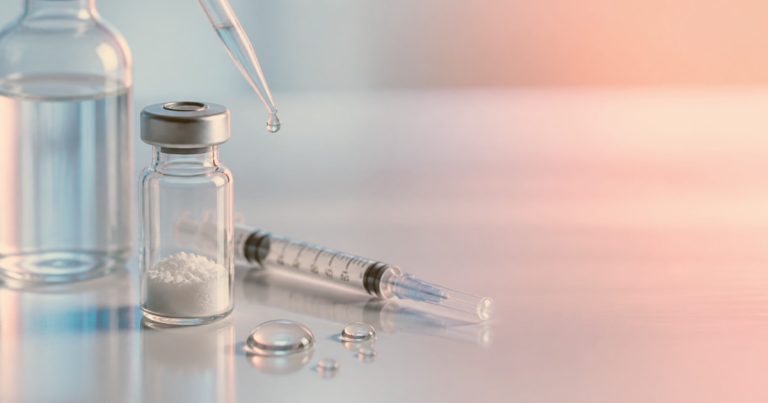
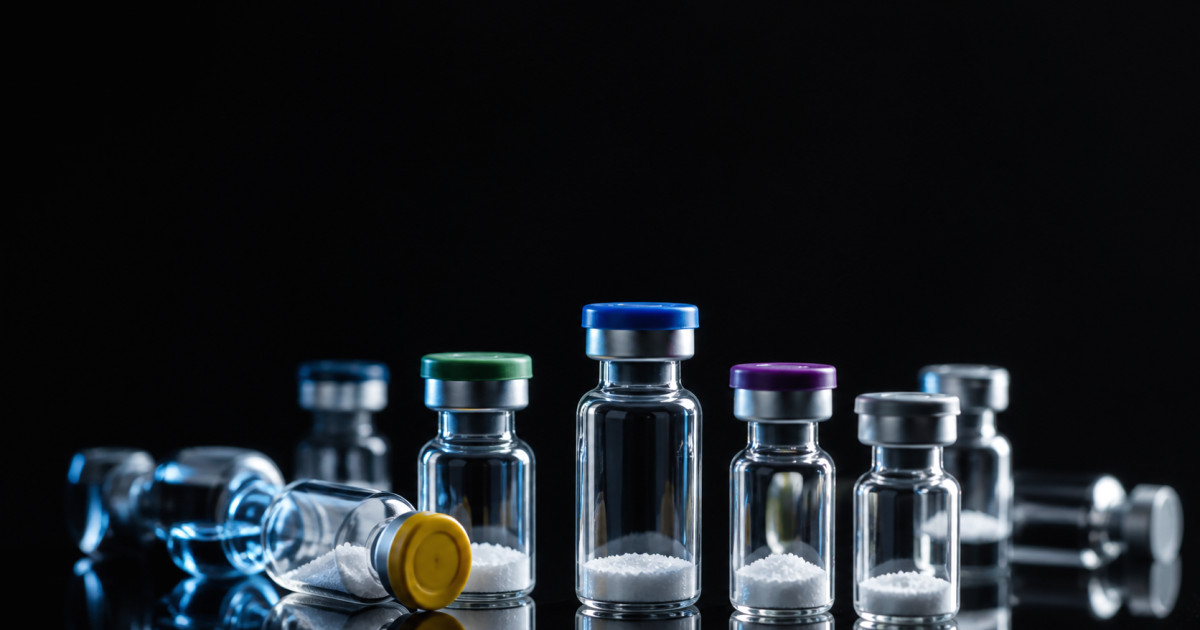
GHRP-6 is packaged as a lyophilized powder in sterile, sealed glass vials topped with inert gas to prevent oxidation. The vials are then placed in desiccated, tamper‑evident secondary containment and shipped at ambient temperature. Although the peptide is stable during transit, recipients should transfer the vials to the recommended storage conditions (-20°C) as soon as possible after delivery.
During reconstitution, all manipulations should be conducted under a laminar flow hood using aseptic technique. Contamination can degrade the peptide and introduce artifacts into experimental results. Use of sterile solvents and low‑protein‑binding consumables is standard practice. Proper handling not only maintains peptide integrity but also supports the safety of laboratory personnel.
Regulatory Compliance
GHRP-6 and similar research peptides are categorically designated for laboratory research use only. They are not permitted for human or veterinary diagnostic, therapeutic, or prophylactic purposes. Prospective buyers must confirm that their intended application aligns with this restriction and that the importation, possession, and use of the material comply with all applicable laws in their jurisdiction.
Export and import controls may require additional permits or end‑user statements. For instance, peptides may be classified as dual‑use items under certain trade regulations. Responsible suppliers provide a detailed item description and the chemical abstracts service (CAS) number to facilitate customs clearance. It is the sole responsibility of the buyer to remain informed of, and adhere to, any legal obligations governing research compounds in their country.
Choosing a Reliable Supplier
Selecting a supplier for research peptides demands attention to transparency and quality infrastructure. Indicators of reliability include readily accessible batch‑specific certificates of analysis, documented quality management systems such as ISO 9001, and a history of peer‑reviewed publications citing the supplier’s products. A supplier that voluntarily submits its peptides to independent third‑party analytical laboratories demonstrates a commitment to impartial quality verification.
Customer‑centric factors are equally important. Review industry forums and reference checks to gauge the supplier’s track record for on‑time delivery, packaging robustness, and responsiveness to technical inquiries. Flexible payment options—wire transfer, major credit cards, and net‑term accounts for accredited institutions—often reflect a supplier’s operational maturity. When you set out to buy GHRP-6 bulk wholesale, a supplier that combines documented purity, dependable logistics, and clear communication reduces the risk of experimental downtime.
Frequently Asked Questions
What is the minimum order quantity to access bulk pricing? Typically, a minimum of 100 milligrams is required to qualify for wholesale pricing. Larger quantities, such as multiple grams, unlock additional tiered discounts.
How long does delivery usually take? Standard lead time for in‑stock GHRP-6 is 5 to 10 business days, depending on the destination and customs processing. Orders placed with expedited shipping or for unusually large volumes may require a custom production timeline, which the supplier will confirm before order acceptance.
Which payment methods are accepted? Most reputable suppliers support wire transfer, major credit cards (Visa, MasterCard), and, for qualified research institutions, net‑30 or net‑60 terms. Detailed invoices and pro‑forma documents are provided to facilitate institutional purchasing procedures.
Can the peptide be shipped internationally? International shipments are standard, provided the buyer ensures compliance with all import regulations. Shipments are discreetly labeled with the chemical name, CAS number, and the designation “for research purposes only.” Buyers should be prepared to provide any required import permits or end‑user declarations.
How should I store the peptide upon receipt? Immediately place the lyophilized vials in a freezer at -20°C. After reconstitution, keep the solution refrigerated and use within one month. To minimize freeze‑thaw damage, aliquot the solution into single‑experiment portions before freezing any unused material.
What documentation accompanies a bulk order? Every shipment includes a lot‑specific certificate of analysis and a safety data sheet. The certificate details HPLC purity, mass spectrometry results, net peptide content, and recommended storage conditions.
All products discussed in this article are intended exclusively for in vitro laboratory research. They are not for use in humans, animals for diagnostic or therapeutic purposes, or any form of clinical application. Researchers must comply with all applicable institutional, local, national, and international regulations regarding the acquisition, handling, and disposal of research compounds.
For research use only. Not for human or veterinary use.