Unterstützung des Immunsystems

PNC-27

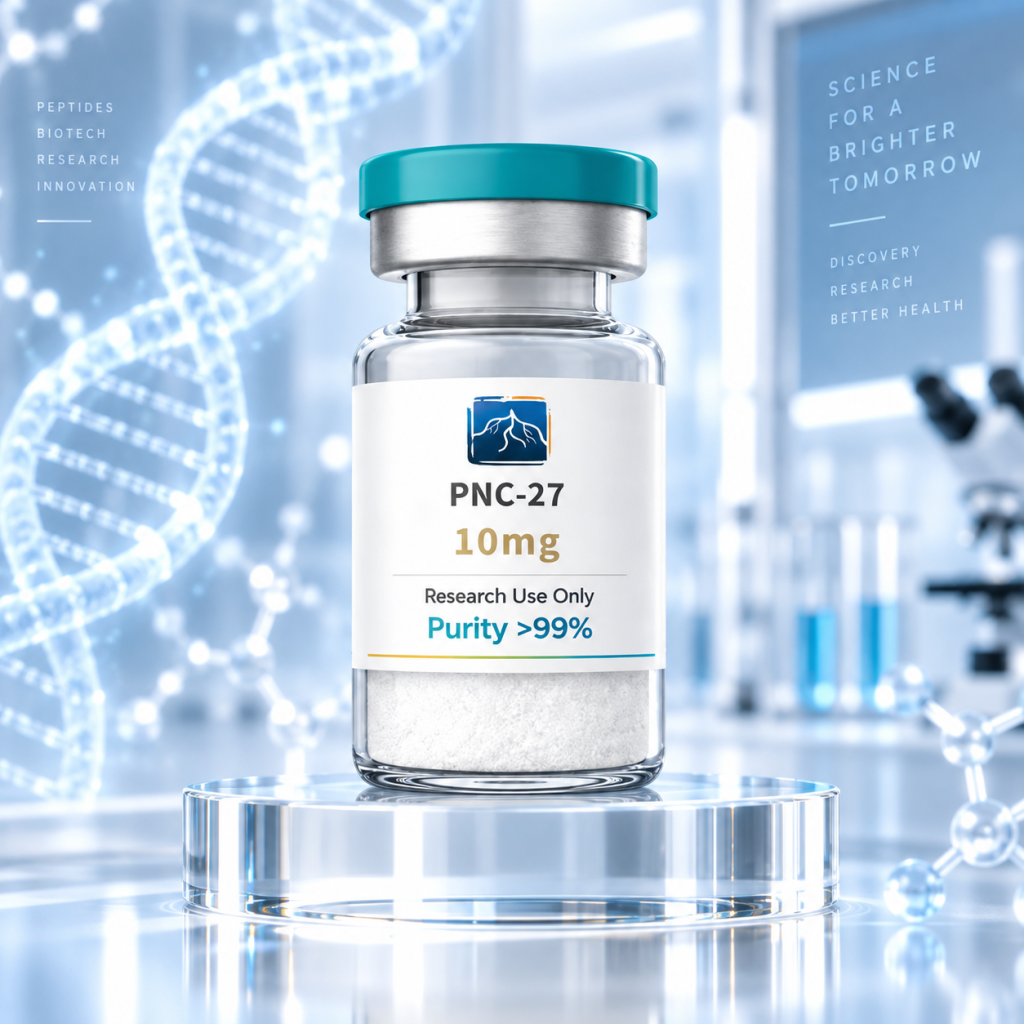
PNC-27 is a synthetic anticancer peptide that selectively targets and destroys cancer cells by binding to HDM-2, an oncoprotein expressed on cancer cell membranes but absent on healthy cells. It forms transmembrane pores causing necrosis rather than apoptosis, reducing metastasis risk. Effective against leukemia, breast, pancreatic, colorectal, and ovarian cancers with minimal impact on healthy tissue. Available as lyophilized powder.

Molekulare Formel Chimeric peptide
Molekulargewicht ~3500 g/mol
Sequenz/Komposition p53-penetratin chimeric peptide
Aminosäuren ~32

Verfügbare SKUs

Modell Spezifikation MOQ
pnc27-5 5ml 1 Fläschchen
pnc27-10 10ml 1 Fläschchen
pnc27-20 20ml 1 Fläschchen
Versand innerhalb von 3-5 Werktagen
Inklusive Analysenzertifikat
Garantierte Qualität

Produktübersicht

PNC-27 is a chimeric p53-penetratin peptide that targets the HDM-2 protein found on cancer cell membranes. Its selectivity is based on the critical observation that HDM-2 is highly expressed on cancer cell membranes but is very low or undetectable on normal, healthy cells. This creates a precise targeting mechanism that distinguishes it from conventional chemotherapy.

Mechanismus der Wirkung

PNC-27 binds to HDM-2 proteins on cancer cell membrane surfaces, inducing transmembrane pore formation. This pore formation disrupts membrane integrity, causing water influx and cell bursting (necrosis). Additionally, PNC-27 damages cancer cell mitochondria, further compromising cellular viability. This dual action — membranolysis plus mitochondrial damage — delivers comprehensive cancer cell destruction.

Wichtigste Vorteile

High Cancer Cell Selectivity — Binds exclusively to HDM-2 on cancer cell membranes, leaving healthy cells unharmed. Provides targeted therapy without the systemic toxicity of conventional chemotherapy.

Broad-Spectrum Efficacy — Demonstrated effectiveness against multiple cancer types including acute myeloid leukemia, breast cancer, pancreatic cancer, colorectal cancer, ovarian cystadenocarcinoma, and melanoma.

Necrosis-Based Mechanism — Induces necrosis rather than apoptosis, which may reduce the risk of tumor cell fragments entering the bloodstream and causing metastatic spread.

Mitochondrial Disruption — Damages cancer cell mitochondria as an additional mechanism of action, providing a multi-layered attack on cancer cell viability.

Referenzen

  1. Sarafraz-Yazdi E, et al. PNC-27 binds to HDM-2 in a p53 peptide-like structure, induces selective membrane-pore formation and leads to cancer cell lysis. *Biomedicines.* 2022;10(5):945.
  2. Ghaly G, et al. Anti-cancer peptides: status and future prospects. *Molecules.* 2023;28(3):1148.
  3. Bowne WB, et al. Novel peptides from the RAS-p21 and p53 proteins for the treatment of cancer. *Cancer Therapy.* 2007;5B:331.

Technische Unterstützung

Unser Team steht Ihnen rund um die Uhr zur Verfügung, um Sie bei Produktfragen und technischem Support zu unterstützen.

Kontakt zum Support

OEM-Dienste

Benötigen Sie Änderungen oder größere Mengen? Kontaktieren Sie uns für ein individuelles Angebot.

Anfrage Benutzerdefiniert
Molekulare Formel Chimeric peptide
Molekulargewicht ~3500 g/mol
Sequenz/Komposition p53-penetratin chimeric peptide
Aminosäuren ~32
Formular Lyophilisiertes Pulver
Reinheit ≥99% mittels HPLC
Lagerung -20°C, getrocknet

Benötigen Sie OEM oder eine kundenspezifische Konfiguration?

Wir bieten kundenspezifische Synthese, Modifikationen und OEM-Dienste an. Teilen Sie uns Ihre Anforderungen mit, einschließlich Sequenz, Reinheit, Menge und spezielle Bedürfnisse - unser Team wird Ihnen ein detailliertes Angebot erstellen.