Introduction to Hexarelin for Research
Hexarelin is a synthetic hexapeptide belonging to the growth hormone secretagogue (GHS) family. Its amino acid sequence is derived from the GH-releasing peptide (GHRP) class, and it acts as a potent agonist at the ghrelin receptor (GHS-R1a). The compound has drawn attention in experimental endocrinology and cellular biology due to its strong affinity for these receptors and its ability to stimulate growth hormone (GH) release in laboratory models. Peer-reviewed studies, such as those catalogued in the Journal of Endocrinology, describe Hexarelin’s utility in investigating pituitary function, receptor signaling cascades, and metabolic pathways. All products discussed here are strictly for laboratory research use only and are not intended for human or veterinary application. Bulk purchasing of Hexarelin enables large-scale research initiatives to maintain consistent experimental conditions, reduce per-unit costs, and secure sufficient material for extended study timelines. When procuring peptides in bulk, researchers must prioritize quality documentation, storage stability, and supplier transparency to safeguard experimental integrity.
Buying Hexarelin in Bulk: What Researchers Need to Know
Bulk orders of Hexarelin typically range from 100 milligrams to 1 kilogram, depending on the scope of the research program. Large quantities are often required for longitudinal studies, high-throughput screening campaigns, or multi-center collaborative projects. Before committing to a bulk purchase, several practical considerations must be evaluated. First, the long-term storage environment: Hexarelin is supplied as a lyophilized powder, which exhibits extended stability when kept at -20°C in a desiccated, light-protected container. Under these conditions, degradation is minimized, and the peptide remains suitable for reconstitution over several years. Second, purity and impurity profiling: research-grade Hexarelin should meet a minimum purity threshold of 98% as determined by high-performance liquid chromatography (HPLC). Third, the supplier’s reliability in providing consistent lot-to-lot quality and comprehensive documentation—including certificates of analysis (CoA), mass spectrometry data, and endotoxin test results—is essential for reproducibility. Fourth, researchers must account for handling protocols: the lyophilized form should be aliquoted into single-use portions upon receipt to avoid repeated freeze-thaw cycles, which can compromise peptide structure and bioactivity. By addressing these factors before ordering, laboratories can ensure that bulk Hexarelin remains a cost-effective and scientifically sound investment.
Quality and Purity Standards for Research-Grade Hexarelin
Research-grade Hexarelin must adhere to stringent quality benchmarks to produce reliable experimental data. The primary purity criterion is ≥98% as measured by reversed-phase HPLC at 214 nm, a wavelength sensitive to peptide bonds. This level of purity minimizes the influence of synthesis byproducts, truncated sequences, or deletion peptides that could confound bioassay results. In addition to HPLC, orthogonal analytical methods such as mass spectrometry (ESI-MS or MALDI-TOF) are often used to confirm molecular weight and sequence identity. For studies involving cell cultures or whole-animal models, endotoxin content is a critical parameter. Suppliers typically test via the Limulus amebocyte lysate (LAL) assay and report levels below 1.0 EU/mg, ensuring compatibility with sensitive in vitro and in vivo experimental designs. Every bulk order should be accompanied by a lot-specific Certificate of Analysis (CoA) that details these measurements. The CoA may also include peptide content (net peptide weight after accounting for counterions and residual water), solubility guidance, and storage recommendations. Laboratories should review CoAs carefully and consider independent re-testing when the material will be used in highly regulated or pivotal experiments.
Storage and Handling of Hexarelin Peptide
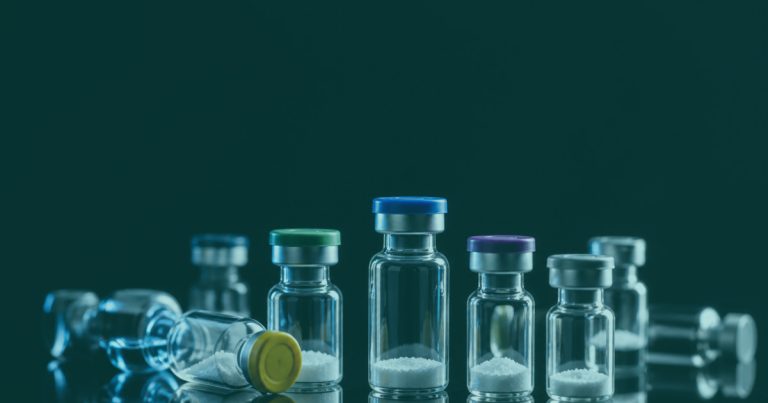
Proper storage and handling are critical to maintaining the integrity of bulk Hexarelin. The lyophilized powder should be stored at -20°C or colder, in a sealed container with desiccant to protect against moisture. Oxygen and light can also accelerate degradation; amber glass vials or foil-wrapped tubes are advisable. When reconstitution is required, researchers often use sterile water for injection (SWI) or a buffered solution such as phosphate-buffered saline (PBS), following the specific solubility profile of Hexarelin. Acidic conditions (pH 2-4) may be recommended to fully dissolve the peptide if aggregation is observed. Once reconstituted, the solution should be aliquoted into single-use volumes and stored at -20°C or -80°C. Repeated freeze-thaw cycles must be avoided because they induce aggregation and cleavage, reducing the active fraction. For daily bench work, a working aliquot can be kept at 2-8°C for short periods, but any unused portion should be discarded according to laboratory waste protocols. Documenting the date of reconstitution and storage conditions in a laboratory notebook helps trace any stability-related variability in downstream assays.
Hexarelin Bulk Wholesale: Sourcing Considerations
Sourcing bulk Hexarelin wholesale requires careful vetting of suppliers to ensure product authenticity and regulatory compliance. First, verify that the supplier follows recognized quality management systems, such as ISO 9001 or good manufacturing practice (GMP) guidelines adapted for research chemicals. While GMP for finished pharmaceuticals differs from GMP for peptides sold for research, a supplier’s adherence to systematic process controls can indicate higher reliability. Second, confirm that the supplier’s facility uses validated analytical methods and provides full documentation for each batch, including the CoA, material safety data sheet (MSDS), and, if applicable, a statement of origin. Third, researchers must ascertain whether the peptide can be legally imported into their country. Hexarelin is classified as a research chemical in most jurisdictions, meaning it has no approved human therapeutic use and may be subject to import permits or customs declarations. The European Chemicals Agency (ECHA) and the U.S. Food and Drug Administration (FDA) provide regulatory frameworks, but local laws vary. Many countries require an end-user declaration stating the product’s intended research purpose. Fourth, shipping logistics play a significant role: lyophilized peptides are generally stable at ambient temperature for brief transit periods, but bulk quantities may be shipped with dry ice or cold packs to minimize any thermal stress, especially for international orders. Requesting a shipping validation report can give confidence that the cold chain was maintained throughout transit.
Comparing Hexarelin Suppliers for Bulk Orders
When evaluating suppliers for bulk Hexarelin, price per milligram is an obvious metric, but it should not be the sole factor. Low cost often correlates with minimal quality testing or incomplete documentation. Compare pricing across multiple vendors while also examining minimum order quantities (MOQs). Some suppliers offer flexible tiers: for example, 100 mg, 1 gram, 10 grams, and 1 kilogram, with progressively lower per-unit costs. Others may require a fixed high-volume commitment. Assess whether the supplier can accommodate a trial order before a full-scale purchase, which allows in-house quality verification. Shipping conditions matter: confirm if dry ice or gel packs are used, whether the peptide is shipped in sealed, moisture-barrier packaging, and typical transit times. Delays at customs can expose the shipment to suboptimal temperatures; a reliable supplier will use data loggers or insulated containers to mitigate such risks. Finally, examine the supplier’s transparency regarding resynthesis and lot change notifications. Consistent communication about batch-specific analytics enables researchers to detect and account for any intersample variability.
Applications of Hexarelin in Laboratory Research
Hexarelin is extensively utilized in experimental endocrinology to probe growth hormone (GH) secretion mechanisms and pituitary somatotroph function. In rodent and porcine models, it has been employed to characterize the dose-response relationship between GHS-R1a activation and downstream signaling pathways, including calcium mobilization and PKC/ERK cascades. Because of its high affinity for the ghrelin receptor, Hexarelin serves as a reference ligand in competitive binding assays that differentiate GHS-R1a agonists from antagonists. Such assays contribute to the pharmacological profiling of novel compounds. Beyond receptor studies, the peptide is applied in pharmacokinetic investigations to map its metabolic stability, plasma protein binding, and clearance profiles. Researchers also use Hexarelin to study the interplay between the ghrelin system and metabolic regulation, particularly in animal models of altered energy balance. Its hexapeptide structure makes it a useful template for structure-activity relationship (SAR) studies aiming to develop more selective or longer-acting analogs. In all these applications, the availability of bulk, high-purity Hexarelin ensures that experiments are powered adequately and that cross-experiment comparisons are valid. Cell-based assays, ex vivo tissue incubations, and in vivo experimental designs each require careful peptide handling to preserve biological activity.
Frequently Asked Questions About Bulk Hexarelin
What is the shelf life of bulk Hexarelin? When stored as a lyophilized powder at -20°C in a desiccated, light-protected environment, bulk Hexarelin typically remains stable for up to 2 years from the date of manufacture. The exact shelf life is lot-dependent and should be confirmed via the supplier’s CoA. After reconstitution, the solution stability decreases significantly and is generally recommended for use within days to weeks, contingent upon the storage temperature and buffer composition.
Is Hexarelin legal for research purposes? Yes, Hexarelin is legal to possess and use for laboratory research in many countries, provided it is handled as a research chemical with no recognized human therapeutic application. Researchers should verify the specific legal status in their jurisdiction. Some nations require import licenses, end-user statements, or registration with local chemical control agencies. It is the purchaser’s responsibility to ensure full compliance with all applicable laws and institutional guidelines.
Can bulk Hexarelin be shipped internationally? Yes, international shipping is generally possible, subject to the destination country’s regulations on research peptides. Reputable suppliers will include accurate customs documentation, such as a commercial invoice and a material safety data sheet, and may label the shipment as “research chemical” or “peptide for laboratory use only.” Any import duties, taxes, or clearance delays are typically the responsibility of the buyer. Consulting with the supplier’s logistics team before placing an order can clarify potential issues.
Conclusion: How to Buy Hexarelin Bulk Wholesale for Your Research
To buy Hexarelin bulk wholesale for research purposes, laboratories should adopt a thorough, evidence-based procurement strategy. Select a supplier that demonstrates transparency through comprehensive analytical data, ISO-certified or GMP-compliant processes, and a proven track record in the peptide community. Verify that each bulk lot is accompanied by a CoA confirming ≥98% purity and low endotoxin levels. Plan storage and handling logistics in advance: equip your facility with -20°C freezers, desiccators, and sterile aliquoting supplies. Upon receipt, immediately inspect the shipment for any damage and store the lyophilized powder under recommended conditions. Consult your institutional biosafety and legal departments to confirm that the import, storage, and use of Hexarelin comply with local regulations and ethical guidelines. By following these steps, research teams can secure a consistent supply of high-quality Hexarelin that supports reproducible, impactful laboratory investigations. Always remember that all products are intended solely for laboratory research use and must not be used for any clinical, diagnostic, or therapeutic purpose.
Réservé à la recherche. Ne pas utiliser chez l'homme ni chez les animaux.