
Overview of GHRP-2 in Laboratory Research
Growth hormone releasing peptide‑2 (GHRP‑2) is a synthetic hexapeptide that belongs to the broader family of ghrelin receptor (GHSR) agonists. Its amino acid sequence (D-Ala-D-β-Nal-Ala-Trp-D-Phe-Lys-NH₂) distinguishes it from endogenous ghrelin, yet it retains a high affinity for the growth hormone secretagogue receptor. In research environments, GHRP‑2 serves as a tool to probe the signalling mechanisms that govern pulsatile growth hormone (GH) release from the anterior pituitary. Because its action is mediated primarily through the GHSR‑1a subtype, investigators employ the peptide in studies dissecting the ghrelin axis, calcium mobilisation, and intracellular kinase cascades such as the phospholipase C pathway.
Laboratories routinely utilise GHRP‑2 in in vitro cell models and in vivo rodent or non‑human primate frameworks to characterise GH secretory dynamics under various physiological and pharmacological conditions. The peptide is also applied in receptor binding assays to differentiate GHSR ligands. Importantly, all experimental work with GHRP‑2 is confined to basic and translational research; the compound is not intended for any diagnostic procedure, therapeutic application, or human administration. Peer‑reviewed databases such as PubChem (CID 6918244) and the IUPHAR/BPS Guide to Pharmacology provide reference data on its chemical structure and receptor profile.
Choosing a GHRP‑2 Manufacturer in China
China has become a prominent sourcing hub for research peptides, including GHRP‑2, owing to a mature chemical synthesis infrastructure and efficient supply chains. Partnering with a qualified GHRP‑2 manufacturer in China can offer laboratories competitive pricing without compromising on batch consistency, especially for multi‑gram or larger orders. Many Chinese producers operate dedicated peptide synthesis facilities that integrate solid‑phase peptide synthesis (SPPS) reactors, high‑resolution purification systems, and rigorous analytical suites.
When evaluating a prospective supplier, researchers prioritise transparent quality management. Reputable manufacturers provide full documentation demonstrating that each batch is tested by orthogonal methods—typically reversed‑phase high‑performance liquid chromatography (RP‑HPLC) for purity and electrospray ionisation mass spectrometry (ESI‑MS) for molecular identity. Compliance with Good Manufacturing Practices (GMP) designed for research‑grade materials, often benchmarked against ISO 9001 or similar frameworks, indicates that the facility controls environmental factors, personnel training, and equipment calibration. While GMP for research peptides is not identical to pharmaceutical GMP, adherence to such standards reduces the risk of cross‑contamination and ensures traceability throughout production.
Key Criteria for Supplier Selection
Several specific criteria help differentiate a reliable GHRP‑2 manufacturer from a less proven source:
- Purity threshold: Look for a guaranteed purity of ≥98% determined by HPLC at 214‑220 nm. Many manufacturers also offer batches exceeding 99% for more demanding assays. The impurity profile should be disclosed, with any single impurity typically limited to <1%.
- Certificate of Analysis (CoA): A genuine CoA is batch‑specific and should include peptide content, HPLC retention time, mass spectrum (observed vs. calculated molecular weight), residual solvent levels (e.g., acetonitrile, trifluoroacetic acid), and, where applicable, counter‑ion content (often acetate or chloride). Reject any supplier that cannot provide a CoA linked to your ordered batch number.
- Storage and handling: Confirm that the lyophilised peptide is stored in an inert atmosphere (argon or nitrogen purge) at low temperatures, typically −20 °C, until dispatch. The packaging must protect against moisture ingress. Ask for a stability statement indicating recommended shelf life under specified conditions.
Manufacturing and Quality Control
The synthesis of GHRP‑2 follows a well‑established protocol rooted in Fmoc‑based solid‑phase peptide synthesis. Starting from a resin‑bound C‑terminal lysine, each protected amino acid derivative is sequentially coupled using activators such as HBTU or HATU in the presence of a base. After chain assembly, the peptide is cleaved from the resin and globally deprotected with a cocktail containing trifluoroacetic acid (TFA) and scavengers. The crude product is precipitated, washed, and then subjected to preparative RP‑HPLC, where the target peptide is separated from deletion sequences and truncated by‑products.
Purified GHRP‑2 undergoes an array of quality control tests. Identity confirmation is achieved by ESI‑MS or MALDI‑TOF mass spectrometry, with the observed monoisotopic mass matching the theoretical value (approximately 818.0 Da for the free base form). Peptide content (net peptide weight) is determined by amino acid analysis or nitrogen determination, ensuring that the gravimetric mass reflects the active peptide and not residual water or counter‑ions. Purity is re‑checked on an analytical C18 column using a linear gradient of acetonitrile/water with 0.1% TFA. For stability indication, accelerated degradation studies (e.g., exposure to elevated temperature and humidity) may be performed to predict long‑term integrity. Additional methods such as chiral amino acid analysis or circular dichroism can verify enantiomeric purity and secondary structure, respectively, although these are less commonly included in standard release panels.
Product Specifications and Packaging
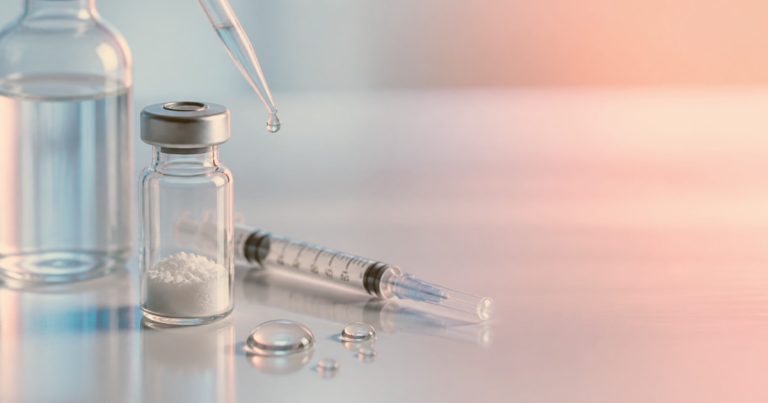
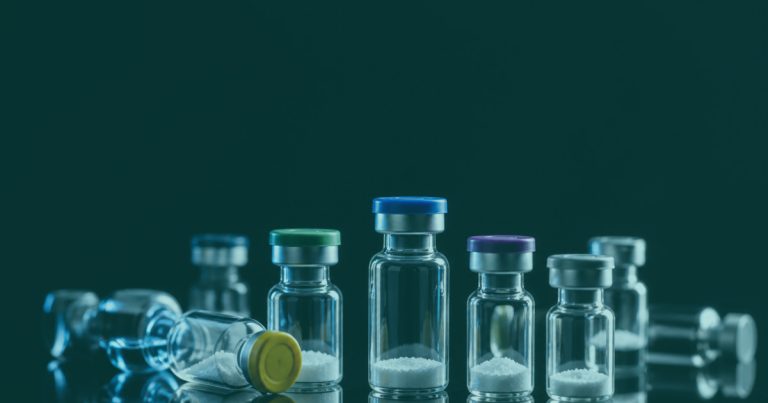
GHRP‑2 supplied by Chinese manufacturers is almost exclusively provided as a white to off‑white lyophilised powder. The freeze‑drying process removes water and organic solvents, yielding a stable solid that can be reconstituted in the researcher’s chosen buffer. Typical vial sizes are 1 mg, 5 mg, 10 mg, and sometimes 25 mg or 50 mg, with custom filling available upon request.
Packaging is designed to maintain chemical integrity during transit and subsequent laboratory storage. Vials are routinely sealed under dry nitrogen or argon inside glass containers capped with bromobutyl rubber stoppers and flip‑off aluminium seals. Multiple vials may be packed in heat‑sealed foil pouches with desiccant sachets to create a moisture‑proof secondary barrier. Outer cartons are sturdy, bored for thermal insulation when required, and labelled with the product name, batch number, mass, storage conditions, and a clear declaration that the contents are for research use only. Some producers also affix barcoded labels for inventory tracking in automated storage systems.
Shipping and Regulatory Compliance
All GHRP‑2 shipments are contingent on the universal understanding that the material is for laboratory research use only and is not to be employed for any clinical, diagnostic, or veterinary purpose. Exporters in China must navigate both domestic chemical safety regulations and the import rules of the destination country. Typically, they prepare a commercial invoice, a packing list, and a signed statement of intended use confirming that the peptide is a research chemical. For countries with specific import permits (e.g., certain EU member states or Canada under the Controlled Drugs and Substances Act), the buyer is responsible for securing the necessary authorisations before the order is dispatched.
Logistically, lyophilised peptides are relatively robust, but most manufacturers recommend shipping with cold packs in insulated containers if transit times are prolonged or ambient temperatures are high. Courier services such as FedEx, DHL, or UPS are commonly used, with shipments labelled according to IATA dangerous goods regulations only if residual solvents exceed threshold limits—well‑refined GHRP‑2 normally does not require hazardous material declaration. Experienced Chinese exporters include all documentation required for smooth customs clearance, reducing the likelihood of delays. It is advisable to verify that the manufacturer’s declaration aligns with the harmonised system (HS) code 2933.99 for heterocyclic compounds, which most customs authorities recognise for research peptides.
Frequently Asked Questions
What is the typical purity of GHRP‑2 from Chinese manufacturers?
Most established suppliers standardise GHRP‑2 purity at ≥98% by HPLC. Many offer premium grades with purity exceeding 99%. The practical difference for research lies mainly in the reduction of peptide‑related impurities that could confound receptor‑binding studies or cell‑based assays. A detailed CoA should list the exact purity of the individual batch you receive, not a generic claim.
Can I request a custom synthesis or batch size?
Yes, many Chinese peptide houses accept custom synthesis requests, whether for slightly modified sequences or for non‑standard fill sizes. If you need a particular salt form (e.g., chloride instead of acetate), a different net peptide content, or bulk quantities in multi‑gram or kilogram scale, discuss the specification at the inquiry stage. Custom work often involves additional lead time and may be subject to minimum order values.
How is the product shipped and stored?
GHRP‑2 is shipped as a lyophilised powder at ambient temperature for most routes, although cold packs may be included during hot seasons. Upon receipt, the vials should be promptly stored at −20 °C in a dry, light‑protected environment. Under these conditions, the peptide typically remains stable for at least 12–24 months. After reconstitution in sterile water or buffer, the solution should be aliquoted and kept at −20 °C to −80 °C, avoiding repeated freeze‑thaw cycles. Always refer to the supplier’s stability data sheet for product‑specific guidance.
Research use only: This product is offered exclusively to qualified laboratories for in vitro and in vivo research. It is not manufactured or intended for human or veterinary administration, clinical diagnosis, or therapeutic application. All information provided herein is for scientific reference and does not constitute any suggestion of use outside regulated laboratory settings.
For research use only. Not for human or veterinary use.