Introduction to Sermorelin as a Research Peptide
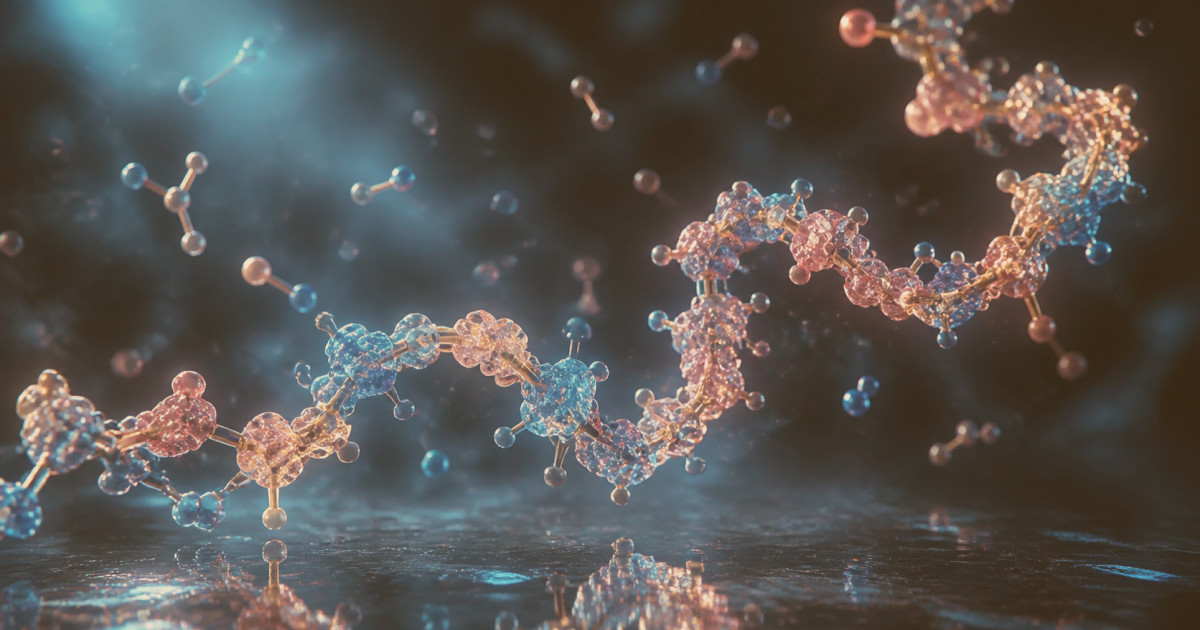
Sermorelin is a synthetic peptide comprising 29 amino acid residues, structurally identical to the biologically active portion of growth hormone-releasing hormone (GHRH). Also referred to as GRF(1–29)–NH₂, this compound corresponds to the shortest fully functional fragment of human GHRH that retains the ability to interact with the GHRH receptor in laboratory settings. Originally characterized by Guillemin and Vale and colleagues, the peptide has the CAS registry number 86168‑78‑7 and is routinely employed as a tool for investigating growth hormone secretion mechanisms in vitro. Researchers seeking sermorelin raw material for sale should note that the substance is supplied strictly for experimental applications in controlled laboratory environments. It is not intended for diagnostic, therapeutic, or any form of human or veterinary use.
Chemical and Structural Properties of Sermorelin
The molecular formula of Sermorelin is C₁₄₉H₂₄₆N₄₄O₄₂S, which corresponds to a monoisotopic molecular weight of approximately 3358.92 g·mol⁻¹. The peptide chain features a free N‑terminus and a C‑terminal amide (Arg‑NH₂), a modification that improves resistance to enzymatic degradation during research procedures. Its primary amino acid sequence is:
H‑Tyr‑Ala‑Asp‑Ala‑Ile‑Phe‑Thr‑Asn‑Ser‑Tyr‑Arg‑Lys‑Val‑Leu‑Gly‑Gln‑Leu‑Ser‑Ala‑Arg‑Lys‑Leu‑Leu‑Gln‑Asp‑Ile‑Met‑Ser‑Arg‑NH₂
In its solid, lyophilised state, Sermorelin appears as a white to off‑white powder. The amidated C‑terminus, together with the carefully selected amino acid composition, makes the peptide a stable starting point for studies on GHRH receptor binding and downstream intracellular signalling cascades. Analytical techniques such as reverse‑phase HPLC and mass spectrometry confirm both the sequence identity and the high degree of purity demanded by research protocols.
Research Applications of Sermorelin
Sermorelin is employed across several areas of biochemical and physiological research, all conducted exclusively in vitro or in authorised laboratory animal models under appropriate ethical approvals. Common uses include:
- Endocrinology studies: The peptide is used to activate pituitary somatotroph cells in culture, enabling investigation of the growth hormone–releasing hormone receptor and the consequent secretion of growth hormone. This model helps elucidate the regulatory loops of the GH–IGF‑1 axis.
- Cell signalling research: By binding to the GHRH receptor, Sermorelin triggers the Gs‑protein/adenylyl cyclase pathway, leading to an increase in intracellular cAMP. Fluorescent probes and reporter constructs are frequently employed to map these second‑messenger responses.
- Protein expression and metabolic assays: In controlled cell culture settings, the peptide can be utilised to study GH‑gene promoter activity, transcription factor dynamics, and the influence of GHRH signalling on metabolic markers such as lipolysis in isolated adipocyte preparations.
- Receptor pharmacology: Sermorelin serves as a reference agonist when characterising novel GHRH receptor analogues or antagonists, supporting concentration‑response experiments and binding displacement assays.
All experiments must be designed within a strict research framework, without any extrapolation to clinical applications.
Quality Specifications for Sermorelin Raw Material
When procuring sermorelin raw material for sale, laboratories rely on a suite of validated quality metrics to ensure reproducibility. Suppliers routinely provide the following data on the certificate of analysis (CoA):
- Chromatographic purity: By reversed‑phase HPLC at 214 nm, purity is typically ≥ 98 %. The chromatogram is included in the batch‑specific documentation.
- Peptide content: Amino acid analysis (AAA) is used to determine the net peptide content, which corrects for counterions and residual moisture. A value of 70–80 % net peptide content is common for lyophilised peptides, and this figure is used to calculate the actual peptide mass delivered.
- Endotoxin levels: Determined by the Limulus Amebocyte Lysate (LAL) assay, endotoxin concentration is maintained below 1 EU·mg⁻¹, making the product suitable for cell‑based assays.
- Mass confirmation: Electrospray ionisation mass spectrometry (ESI‑MS) or matrix‑assisted laser desorption/ionisation (MALDI‑TOF) yields a mass spectrum that matches the theoretical molecular weight.
- Additional structural verification: On request, ¹H‑NMR or 2D‑NMR data can be provided for structural confirmation, and residual solvent analysis may be performed according to ICH guidelines.
Product Form and Storage Conditions
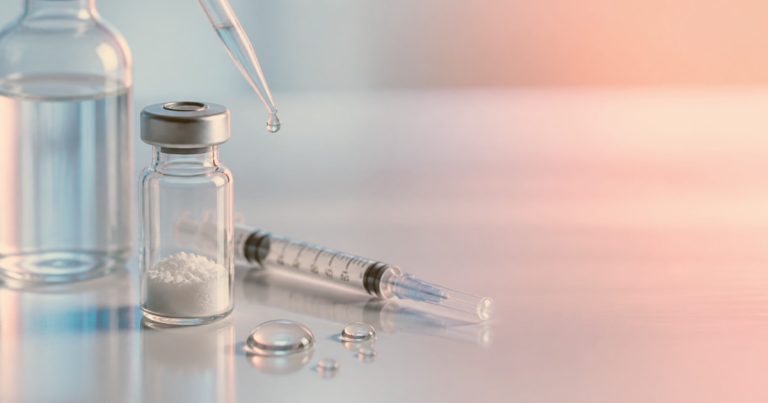
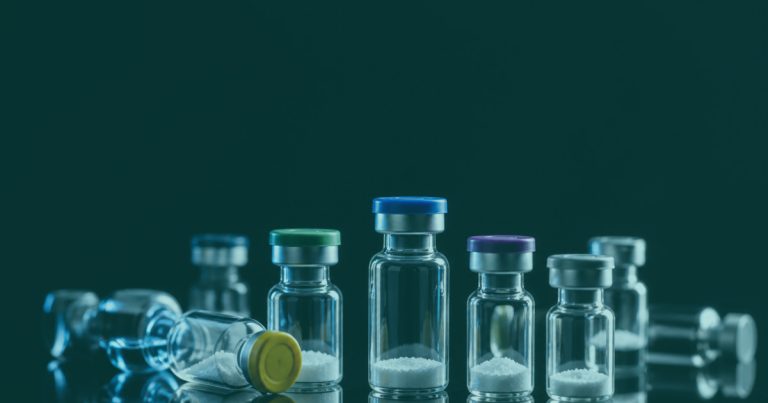
Sermorelin raw material is supplied as a sterile, pyrogen‑free lyophilised powder in clear, depyrogenated glass vials sealed under vacuum or an inert gas overlay. Standard vial sizes include 1 mg, 5 mg, 10 mg, and larger bulk quantities, all customisable to meet the throughput needs of research institutions. The lyophilised powder is stable for at least two years when stored at −20 °C, protected from light and moisture.
For reconstitution in research protocols, sterile water (e.g., ultrapure water for cell culture) or a sterile buffer such as phosphate‑buffered saline (pH 7.4) or 10 mM acetic acid is recommended. After solubilisation, the working solution should be sterile‑filtered, aliquoted into single‑use portions, and kept at −20 °C to −80 °C to minimise degradation. Repeated freeze‑thaw cycles should be avoided, as they can lead to aggregation or loss of activity. Laboratories are advised to verify solubility and stability under their specific experimental conditions.
Packaging and Custom Orders for Research Institutions
Suppliers of sermorelin raw material for sale offer packaging options designed to preserve peptide integrity during domestic and international transit. Vacuum‑sealed, glass vials with a nitrogen or argon atmosphere are standard, and the outer packaging is insulated to maintain temperature stability. For large‑scale projects requiring bulk amounts—for example, chronic in vivo research in laboratory animals conducted under approved ethical protocols—orders of multi‑gram quantities can be arranged.
Custom modifications are a further service provided to the research community. Examples of frequently requested customisations include:
- N‑terminal acetylation or fluorescence labelling with FITC, TAMRA, or Cy3/5 for imaging studies.
- Biotinylation for pull‑down or surface plasmon resonance assays.
- Stable‑isotope labelling (¹³C, ¹⁵N) for use as an internal standard in quantitative mass spectrometry.
- Peptide fragmentation or synthesis of shorter analogues for epitope mapping.
To access these services, customers must present proof of research institution status and, where applicable, an end‑user statement that confirms compliance with local import regulations and institutional biosafety requirements. Each request is evaluated to ensure it aligns with the supplier’s policy of supporting genuine scientific research only.
Compliance and Regulatory Information
All Sermorelin raw material is manufactured exclusively for laboratory research purposes. The product is not a pharmaceutical preparation, nor is it listed in any pharmacopoeia for medical application. It must not be used for diagnostic procedures, clinical treatment, or any purpose involving human or veterinary subjects outside of sanctioned research protocols.
Customers are responsible for verifying that their possession and use of the peptide conform to all applicable laws, institutional guidelines, and ethical committee approvals. The supplier provides a Material Safety Data Sheet (MSDS) and a batch‑specific CoA to aid with customs clearance, but these documents do not imply suitability for any non‑research function. Prospective buyers who are unsure about their regulatory standing should consult their legal or compliance department before initiating a purchase.
Frequently Asked Questions (FAQs)
Is this product for human use?
No. Sermorelin raw material is manufactured, stored, and shipped under conditions suitable for laboratory research only. It is never intended for human or veterinary administration.
What purity level can I expect?
Typical HPLC purity is ≥ 98 %. The exact figure is reported on the certificate of analysis that accompanies each batch. Customers may also request representative HPLC chromatograms and mass spectrometry data before placing an order.
Do you provide documentation for customs?
Yes. Every shipment includes a commercial invoice, a packing list, an MSDS, and the CoA. Additional documents, such as a research‑only declaration or a letter of non‑hazardous classification, can be supplied upon request to expedite clearance.
Can I request a smaller sample for testing?
Sample quantities of 1 mg are available for qualified research accounts. The sample is intended to allow evaluation of solubility, purity, and performance in pilot assays. Approval is subject to a brief institutional verification and an undertaking that the sample will be used solely for research.
How should the peptide be stored after delivery?
Upon receipt, the lyophilised powder should be placed at −20 °C immediately. After reconstitution, working solutions must be aliquoted and stored frozen, with minimal exposure to air, light, and repeated thawing. Refer to the product information sheet for detailed handling instructions.
Research use only: All products mentioned in this article, including sermorelin raw material, are intended exclusively for in vitro and authorised laboratory research applications. They are not to be used for any diagnostic, therapeutic, or other purposes involving humans or animals outside of licensed research environments. Buyers must ensure compliance with all applicable local, national, and international regulations.
For research use only. Not for human or veterinary use.