What is AOD-9604 Bulk Powder?
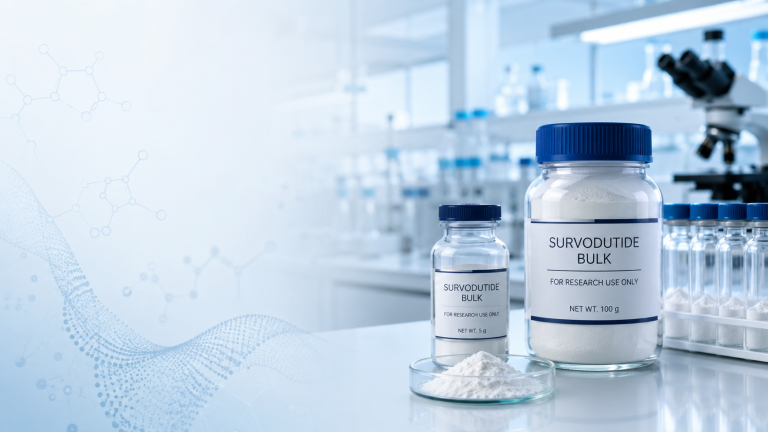
AOD-9604 bulk powder is a synthetic peptide fragment derived from the C‑terminal region of human growth hormone (hGH). Specifically, it corresponds to a modified analogue of the amino acid sequence 176–191 of hGH, often referred to in scientific literature as HGH Fragment 176‑191. This peptide is produced through solid‑phase synthesis and purified to a high degree for use in controlled laboratory environments. The bulk powder format provides research institutions, pharmaceutical companies and distributors with the flexibility to obtain larger quantities for systematic investigations.
In laboratory settings, AOD‑9604 is primarily employed as a tool to study metabolic pathways. Because it originates from a well‑characterized region of the growth hormone molecule, it allows researchers to dissect the specific biological activities attributable to that fragment, without the confounding influence of the full‑length hormone. The peptide has gained attention in metabolic research for its ability to mimic certain hGH‑related functions in experimental models, such as the modulation of lipid metabolism and cellular energy balance.
The designation “bulk powder” indicates that the lyophilized peptide is supplied in multi‑milligram to multi‑gram quantities, typically sealed under inert atmosphere to preserve stability during storage and transport. This format is particularly suited for laboratories conducting large‑scale screening campaigns, successive rounds of in vivo studies, or the development of research‑grade biochemical assays. Each shipment is accompanied by a Certificate of Analysis that reports the batch‑specific purity, identity and endotoxin level.
Chemical Structure and Properties
Molecular Formula and Molecular Weight
The molecular formula of AOD‑9604 is C78H123N23O22S2, and its monoisotopic molecular weight is 1815.09 daltons. The presence of two sulphur atoms corresponds to a disulfide bridge that is essential for maintaining the peptide’s three‑dimensional conformation in solution. This covalent bond contributes to the molecule’s relative resistance to proteolytic degradation under standard laboratory conditions, making it a stable choice for extended in vitro protocols.
Amino Acid Sequence
The complete sequence consists of 16 amino acid residues that recreate the C‑terminal stretch of hGH. A partial representation of the N‑terminal region reads Tyr‑Leu‑Glu‑Asn‑Glu‑Phe. The full chain includes additional residues and the disulfide linkage, forming a cyclic substructure that is critical for interaction with target proteins in research assays. Researchers often confirm the identity of synthetic batches by comparing the observed sequence (via tandem mass spectrometry) with the expected sequence.
Physical Appearance and Solubility
AOD‑9604 bulk powder is a white to off‑white lyophilized solid. It readily dissolves in aqueous solvents such as sterile water or phosphate‑buffered saline (PBS) at concentrations commonly used in laboratory workflows (e.g., 1–10 mg/mL). The peptide may also be solubilised in dilute acetic acid or other compatible buffers when the experimental design requires a specific pH. Complete dissolution should be verified visually, and any particulate matter may indicate the need for brief sonication, which is generally performed in a chilled water bath to avoid thermal degradation.
Aplicaciones de investigación
Metabolic and Lipolytic Studies
One of the most prominent uses of AOD‑9604 in research is the investigation of lipid degradation pathways. In cultured adipocyte models such as 3T3‑L1 cells, the peptide has been observed to stimulate the release of glycerol and free fatty acids, indicating activation of hormone‑sensitive lipase. These cellular systems allow scientists to quantify lipolysis in a dose‑dependent manner, providing insights into the mechanisms that partition lipids between storage and oxidation. The peptide serves as a molecular probe to differentiate the lipolytic effects of the hGH C‑terminal fragment from those mediated by the intact hormone, which can simultaneously activate multiple signalling cascades.
Cell Signaling Investigations
Beyond lipolysis, AOD‑9604 is used to map intracellular signalling networks. Research indicates that the peptide can engage pathways involving cyclic adenosine monophosphate (cAMP) and protein kinase A (PKA) in specific cell types, suggesting a receptor‑mediated mode of action. In vitro kinase assays and reporter gene constructs help delineate how this fragment modulates gene transcription linked to energy expenditure. Because the peptide lacks the broader anabolic and mitogenic attributes of full‑length hGH, it offers a cleaner model for studying signalling events that are uncoupled from growth‑promoting processes.
Endocrine Research Applications
Endocrine laboratories utilise AOD‑9604 to examine the interplay between peptide fragments and hormonal regulation. Experimental designs often include co‑treatment with insulin‑like growth factor‑1 (IGF‑1) or other metabolic hormones to dissect synergistic or antagonistic relationships. Studies on isolated pancreatic islets or hepatoma cell lines have employed the peptide to investigate how short‑chain peptides influence glucose uptake or gluconeogenic gene expression. These experiments contribute to the fundamental understanding of how fragments derived from larger protein hormones can exert selective biological effects.
In Vitro and In Vivo Experimental Models
The peptide is applied across a spectrum of experimental models. In vitro, typical setups involve primary cell cultures, immortalised cell lines, or tissue explants incubated with defined concentrations of AOD‑9604 for fixed time intervals. In vivo, rodent models are often employed — for example, diet‑induced obesity models in mice or rats — to study the metabolic fate of the peptide, its tissue distribution, and the downstream physiological responses. Researchers measure endpoints such as respiratory exchange ratio, adipose tissue mass (via dual‑energy X‑ray absorptiometry), and circulating metabolites, always within a laboratory framework focused on mechanistic inquiry rather than any translational outcome.
Especificaciones de pureza y calidad
Purity Greater than 98% by HPLC Analysis
Every batch of AOD‑9604 bulk powder is subjected to reverse‑phase high‑performance liquid chromatography (RP‑HPLC). The integrated main peak routinely exceeds 98% of the total area under the curve, confirming that the desired peptide constitutes the overwhelming majority of the dry mass. Trace-level impurities, when present, are quantified and reported to help researchers assess batch‑to‑batch consistency.
Endotoxin Levels Below 1 EU/mg
Endotoxin contamination is monitored using the limulus amebocyte lysate (LAL) assay. The specification of less than 1 EU/mg ensures that the peptide is suitable for sensitive cell‑based experiments where endotoxin‑induced inflammation could confound metabolic readouts. This is particularly important for in vivo studies, as even low levels of endotoxin can activate innate immune responses that interfere with metabolic measurements.
Identity Confirmed by Mass Spectrometry
Molecular identity is verified by electrospray ionisation mass spectrometry (ESI‑MS) or matrix‑assisted laser desorption/ionisation (MALDI‑TOF). The observed m/z ratios match the theoretical values derived from the amino acid sequence, confirming both the correct primary structure and the presence of the intramolecular disulfide bond. This step also rules out significant oxidation or deamidation events that could alter the peptide’s behaviour.
Peptide Content Determined by Amino Acid Analysis
To accurately quantify the active peptide content, an amino acid analysis is performed after acid hydrolysis. This technique measures the molar abundance of each residue and corrects for any counter‑ions or residual moisture that may be present in the lyophilized cake. The resulting net peptide content is used to adjust stock solution concentrations, enhancing the reproducibility of dose‑response experiments.
Recomendaciones de almacenamiento y manipulación
Store Lyophilized Powder at -20°C
Upon arrival, the sealed vials should be placed immediately in a freezer set to -20°C or colder. Short‑term transportation at ambient temperature does not compromise stability, but prolonged storage above freezing can lead to gradual hydrolysis or aggregation. For facilities that hold inventory for extended periods, storage at -80°C can further minimise chemical degradation.
Avoid Repeated Freeze‑Thaw Cycles
Once the peptide has been reconstituted in solution, aliquoting into single‑use portions is strongly advised. Repeated freezing and thawing can induce aggregation, oxidation of exposed residues, and loss of bioactivity in experimental systems. By storing working aliquots at -20°C or -80°C and thawing only the volume needed for each experiment, laboratories ensure consistent performance throughout the project.
Reconstitute Fresh Before Use
Reconstitution should be performed shortly before the planned experiment. Sterile, apyrogenic water or buffer is added to the vial to achieve the desired stock concentration. Gentle swirling—rather than vigorous vortexing—is recommended to avoid protein‑like foam formation. Any unused reconstituted solution should be discarded after the experimental window and not refrozen for later use unless stability data generated by the end‑user indicate otherwise.
Use Sterile Techniques to Maintain Integrity
Because peptides are susceptible to microbial contamination, all handling steps should take place in a laminar‑flow hood using aseptic technique. The use of sterile vials, pipette tips and solvents preserves both the chemical integrity of the peptide and the validity of biological assays, where microbial growth can alter pH, consume nutrients, or release proteolytic enzymes.
Bulk Packaging and Ordering Information
Available in Multi‑Gram Quantities
AOD‑9604 bulk powder is supplied in vials containing quantities that range from a few hundred milligrams to several grams. This scaling flexibility meets the needs of core facilities running high‑throughput screening programs, research groups conducting longitudinal rodent studies, and distribution partners who repackage for regional supply chains. Larger orders are typically packaged in single containers to reduce inter‑vial variability, while maintaining the same rigorous quality control standards.
Custom Packaging Options for Research Facilities
To accommodate specific operational workflows, custom packaging can be arranged. Options include pre‑aliquoted amounts in inert‑gas‑flushed vials, barcoded labelling for automated inventory systems, or the inclusion of custom solvent to facilitate immediate reconstitution. Such adaptations help streamline laboratory logistics and reduce handling errors. Discussing requirements directly with the supplier ensures that packaging and documentation align with the receiving institution’s standard operating procedures.
Certificate of Analysis Provided with Each Batch
Every shipment includes a Certificate of Analysis (CoA) that summarises the batch‑specific test results. Typical entries cover HPLC purity, mass spectrometric identification, endotoxin level, and net peptide content. This documentation forms an essential part of the quality assurance records maintained by research institutions and is often required for internal audit trails or grant‑funded project reporting. Electronic copies of the CoA are frequently made available before the physical package arrives, enabling advance review and planning.
Solo para fines de investigación. This product is intended exclusively for laboratory research applications. It is not manufactured, tested, or approved for human or veterinary use, and its activity should be assessed solely in controlled experimental systems. All statements provided are based on technical and scientific data, and they have not been evaluated by any regulatory health authority.
Solo para uso en investigación. No apto para uso humano ni veterinario.