
Introduction to Epitalon in Research
Epitalon is a synthetic tetrapeptide composed of the amino acid sequence alanine, glutamic acid, aspartic acid, and glycine (Ala-Glu-Asp-Gly). Originally designed as a structural analog of epithalamin—a peptide complex extracted from bovine pineal gland tissue—Epitalon is now synthesized via solid-phase methods to ensure high purity and consistency. In laboratory settings, this peptide is employed to study cellular senescence, circadian rhythm modulation, and the regulation of telomere-associated proteins in experimental models. Researchers investigating pineal gland biology or aging pathways often incorporate Epitalon into in vitro and in vivo protocols. The ability to replicate published findings depends on obtaining a preparation that conforms precisely to expected analytical specifications. This guide outlines the rationale and criteria for selecting a supplier that provides third-party tested Epitalon, supporting reproducible experimental outcomes and reliable data.
Importance of Third Party Testing for Epitalon
Independent verification of a peptide’s identity and purity is a critical step in research procurement. Third-party testing means that an accredited analytical laboratory, separate from the manufacturer, performs the quality assessments. This process removes potential bias and gives the end user confidence that the labeling corresponds to the contents. For Epitalon, such testing typically involves orthogonal analytical techniques that collectively confirm the product is free from significant contaminants, contains the correct sequence, and meets the claimed purity level. Researchers who publish their findings are increasingly expected to provide evidence of reagent validation, and a third-party Certificate of Analysis (CoA) serves as that documentation. Institutions and distributors purchasing in bulk rely on this independent data to ensure batch-to-batch consistency, which is essential for long-term studies and multi-center collaborations.
Purity and Composition Verification
Purity assessment is most commonly performed by High-Performance Liquid Chromatography (HPLC). A sample is injected onto a reversed-phase column and eluted with a gradient of acetonitrile and water in the presence of an ion-pairing agent such as trifluoroacetic acid. The resulting chromatogram displays peaks corresponding to the target peptide and any synthesis-related impurities. Integration of the main peak relative to total peak area yields a purity percentage. For research-grade Epitalon, a minimum purity of 95% is standard; many assays benefit from material exceeding 98%. In addition to HPLC, amino acid analysis verifies compositional accuracy. The peptide is hydrolysed, and the molar ratios of alanine, glutamic acid, aspartic acid, and glycine are determined. A result close to the theoretical 1:1:1:1 ratio confirms that no gross synthetic errors occurred and that the peptide is neither truncated nor extended.
Sequence Identity Confirmation
Mass spectrometry (MS) provides direct evidence of molecular identity. Electrospray ionization mass spectrometry (ESI-MS) or matrix-assisted laser desorption/ionization time-of-flight mass spectrometry (MALDI-TOF) measures the mass-to-charge ratio of intact Epitalon molecules. The monoisotopic mass of the free base Ala-Glu-Asp-Gly is 361.35 Da; the acetate salt commonly supplied will exhibit a mass shift due to counterions. The observed mass spectrum should display a dominant ion consistent with the calculated molecular weight within a narrow error margin (typically ≤ 1 Da). Tandem MS (MS/MS) adds a second dimension of analysis by fragmenting the peptide and recording the resulting ion series, which can be interpreted to confirm the sequence order. Some laboratories also employ Edman degradation sequencing as an orthogonal method. Consistent MS data across multiple batches indicates that the peptide structure remains invariant, a prerequisite for reproducible experimental conditions.
Criteria for Selecting an Epitalon Supplier
A reliable supplier of Epitalon should demonstrate technical competence and transparency. The foundation of supplier evaluation is the provision of detailed, third-party Certificates of Analysis. These documents should contain actual HPLC chromatograms (not merely a textual statement of purity), mass spectra, and, optionally, amino acid analysis results. The supplier’s manufacturing process should be well-documented; solid-phase peptide synthesis using Fmoc chemistry is standard, and preparative HPLC purification should be employed to achieve the stated purity. While current Good Manufacturing Practice (cGMP) certification is not required for research materials, adherence to GMP-like quality principles—including batch traceability, environmental monitoring, and validated analytical methods—indicates a strong quality culture. Prospective buyers should also verify that the supplier’s commercial communications and product labels explicitly state that the product is for laboratory research use only, with no human or veterinary applications implied.
Documentation and Transparency
Comprehensive documentation enables the researcher to assess product quality before initiating costly experiments. A batch-specific CoA should include the batch or lot number, date of analysis, purity by HPLC, observed molecular mass, and storage recommendations. The testing laboratory’s name and accreditation status (for example, ISO/IEC 17025) add credibility. Additionally, synthesis records should disclose the salt form—Epitalon is often supplied as an acetate or trifluoroacetate salt—and the residual levels of cleavage reagents or organic solvents. Transparent labeling carries the phrase “For Laboratory Research Use Only” prominently, helping institutions comply with biosafety and legal guidelines. When a supplier readily provides such information, it reflects a commitment to supporting the scientific community with consistent, well-characterized reagents.
Quality Control Procedures
Beyond peptide identity and purity, a mature quality control program addresses other potential impurities. Residual organic solvents (e.g., acetonitrile, dimethylformamide) can be quantified by gas chromatography. Heavy metal content may be tested by inductively coupled plasma mass spectrometry (ICP-MS) for applications where metal ions could interfere with enzymatic assays. For cell culture studies, a bacterial endotoxin test using the Limulus amebocyte lysate (LAL) method is recommended. Stability studies conducted under recommended storage conditions (-20°C in a lyophilized state) determine appropriate retest dates or shelf life. Lot number traceability links every shipment back to a specific manufacturing campaign, enabling timely investigation if unexpected results are observed in the laboratory.
Our Epitalon Product Specifications
We supply Epitalon as a lyophilized powder, acetate salt, with the linear sequence L-alanyl-L-glutamyl-L-aspartyl-glycine. The free base molecular formula is C14H23N3O8, corresponding to a molecular weight of 361.35 g/mol. The acetate salt form (C14H23N3O8·xC2H4O2) has a slightly higher mass depending on the counterion ratio. Every lot is subjected to thorough analytical characterization, and the purity is guaranteed at ≥98% by reversed-phase HPLC with sequence identity confirmed by mass spectrometry.
Testing Methods Used
- HPLC: Reversed-phase C18 column (4.6 × 150 mm, 5 μm), gradient of 5–65% acetonitrile in water with 0.1% trifluoroacetic acid over 25 minutes, detection at 220 nm. The target peptide peak area represents ≥98% of total integration.
- Mass Spectrometry: ESI-MS in positive ion mode yields a dominant [M+H]+ ion at m/z 362.1 for the free base. The isotopic pattern is consistent with the theoretical distribution. MALDI-TOF may be used as a complementary technique.
- Contenido de agua: Determined by Karl Fischer coulometric titration; specification ≤10% to ensure accurate peptide net weight.
- Análisis de aminoácidos: Following acid hydrolysis, molar ratios of alanine (1.0), glutamic acid (1.0), aspartic acid (1.0), and glycine (1.0) are confirmed within ±0.1.
Packaging and Storage
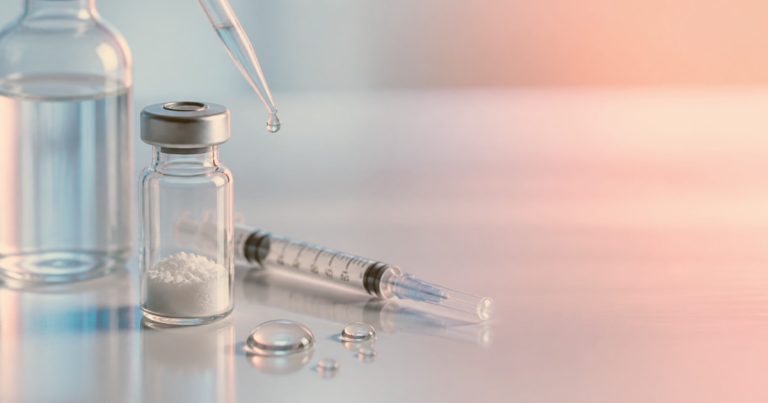
Epitalon is aseptically dispensed into sterile Type I borosilicate glass vials, sealed with rubber stoppers and aluminum flip-off caps. Each vial label carries the product name, lot number, net peptide content, and the cautionary statement “For Laboratory Research Use Only.” The lyophilized powder should be stored at -20°C in a desiccated, light-protected environment. When handled as recommended, the shelf life is 24 months from the date of manufacture. Upon reconstitution in a suitable solvent (such as sterile phosphate-buffered saline), the solution should be aliquoted into single-use portions and stored at -80°C to minimize freeze–thaw degradation.
Garantía de calidad y cumplimiento normativo
Our quality management framework aligns with ISO 9001:2015 principles. All processes, from raw material qualification to final product release, are controlled and documented. The product is manufactured exclusively for laboratory research purposes; it is not intended for diagnostic, therapeutic, or any form of in vivo human or veterinary use. We do not make any claims regarding medical utility, biological activity in humans, or safety for consumption. Researchers are responsible for ensuring that their experiments with Epitalon comply with applicable institutional, national, and international regulations. We support only lawful research, including studies conducted under appropriate ethical approvals.
How to Order Epitalon for Research
Purchasing inquiries should be directed to our sales team via the contact form on our website or by email. Please provide your institutional or company name, shipping destination, and a brief description of the intended research application. First-time buyers may be asked to submit a statement confirming their research status (for example, affiliation with a university, hospital, or biotech firm). We do not supply individuals for personal use. The minimum order quantity is typically 5 mg, though larger quantities—up to gram-scale—are available for established laboratories and distributors. Shipments are dispatched under cold-chain conditions using insulated packaging and ice packs. Delivery times depend on destination and local customs procedures; customers are advised to confirm their import eligibility for peptide research reagents in advance.
Preguntas frecuentes
Q: Is Epitalon suitable for human use?
A: No. All our products are strictly for laboratory research and are not manufactured or approved for human or veterinary administration. No clinical signals are implied.
Q: Do you provide a Certificate of Analysis?
A: Yes. A third-party CoA from an independent accredited laboratory is included with each shipment, showing HPLC and MS results for that specific batch.
Q: What is the minimum order quantity?
A: The standard minimum is 5 mg. Smaller evaluation samples may be available for feasibility studies upon request. Bulk orders are welcome for larger projects.
Q: Can you synthesize modified Epitalon analogs?
A: We offer custom peptide synthesis services for a range of modifications, including biotinylation, fluorescent labeling, and cyclization. Contact our technical team with your specifications for a feasibility assessment.
Q: How should I store reconstituted Epitalon?
A: For maximum stability, aliquot the solution into single-use vials and store at -80°C. Avoid repeated freeze–thaw cycles. Short-term storage at 2–8°C for up to 48 hours is generally acceptable but should be validated for your specific assay.
Research Use Only Notice: All products described are intended solely for laboratory research applications. They are not for use in humans or animals for diagnostic, therapeutic, or prophylactic purposes. No representation is made regarding the suitability of any product for a particular research goal. The buyer assumes all responsibility for handling, use, and disposal in compliance with applicable regulations.
Solo para uso en investigación. No apto para uso humano ni veterinario.