Soutien immunitaire

PNC-27

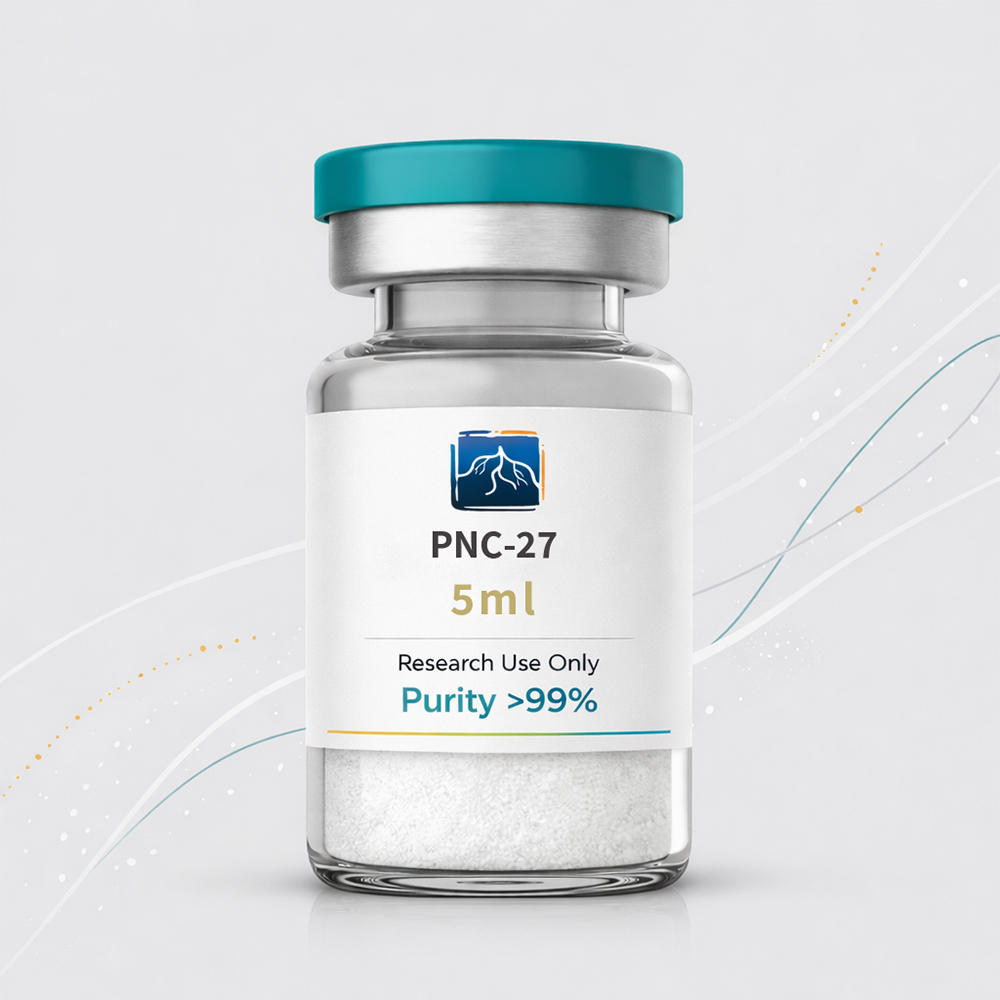
PNC-27 is a synthetic anticancer peptide that selectively targets and destroys cancer cells by binding to HDM-2, an oncoprotein expressed on cancer cell membranes but absent on healthy cells. It forms transmembrane pores causing necrosis rather than apoptosis, reducing metastasis risk. Effective against leukemia, breast, pancreatic, colorectal, and ovarian cancers with minimal impact on healthy tissue. Available as lyophilized powder.

Formule moléculaire Chimeric peptide
Poids moléculaire ~3500 g/mol
Séquence/Composition p53-penetratin chimeric peptide
Acides aminés ~32

UGS disponibles

Modèle Spécifications MOQ
pnc27-5 5ml 1 flacon
pnc27-10 10ml 1 flacon
pnc27-20 20ml 1 flacon
Expédition dans les 3 à 5 jours ouvrables
Certificat d'analyse inclus
Qualité garantie

Aperçu du produit

PNC-27 is a chimeric p53-penetratin peptide that targets the HDM-2 protein found on cancer cell membranes. Its selectivity is based on the critical observation that HDM-2 is highly expressed on cancer cell membranes but is very low or undetectable on normal, healthy cells. This creates a precise targeting mechanism that distinguishes it from conventional chemotherapy.

Mécanisme d'action

PNC-27 binds to HDM-2 proteins on cancer cell membrane surfaces, inducing transmembrane pore formation. This pore formation disrupts membrane integrity, causing water influx and cell bursting (necrosis). Additionally, PNC-27 damages cancer cell mitochondria, further compromising cellular viability. This dual action — membranolysis plus mitochondrial damage — delivers comprehensive cancer cell destruction.

Principaux avantages

High Cancer Cell Selectivity — Binds exclusively to HDM-2 on cancer cell membranes, leaving healthy cells unharmed. Provides targeted therapy without the systemic toxicity of conventional chemotherapy.

Broad-Spectrum Efficacy — Demonstrated effectiveness against multiple cancer types including acute myeloid leukemia, breast cancer, pancreatic cancer, colorectal cancer, ovarian cystadenocarcinoma, and melanoma.

Necrosis-Based Mechanism — Induces necrosis rather than apoptosis, which may reduce the risk of tumor cell fragments entering the bloodstream and causing metastatic spread.

Mitochondrial Disruption — Damages cancer cell mitochondria as an additional mechanism of action, providing a multi-layered attack on cancer cell viability.

Références

  1. Sarafraz-Yazdi E, et al. PNC-27 binds to HDM-2 in a p53 peptide-like structure, induces selective membrane-pore formation and leads to cancer cell lysis. *Biomedicines.* 2022;10(5):945.
  2. Ghaly G, et al. Anti-cancer peptides: status and future prospects. *Molecules.* 2023;28(3):1148.
  3. Bowne WB, et al. Novel peptides from the RAS-p21 and p53 proteins for the treatment of cancer. *Cancer Therapy.* 2007;5B:331.

Support technique

Notre équipe est disponible 24 heures sur 24, 7 jours sur 7, pour répondre aux questions sur les produits et fournir une assistance technique.

Support de contact

Services OEM

Besoin de modifications ou de plus grandes quantités ? Contactez-nous pour un devis personnalisé.

Demande sur mesure
Formule moléculaire Chimeric peptide
Poids moléculaire ~3500 g/mol
Séquence/Composition p53-penetratin chimeric peptide
Acides aminés ~32
Formulaire Poudre lyophilisée
La pureté ≥99% par HPLC
Stockage -20°C desséché

Besoin d'un OEM ou d'une configuration personnalisée ?

Nous proposons des synthèses sur mesure, des modifications et des services OEM. Faites-nous part de vos exigences, notamment en matière de séquence, de pureté, de quantité et de besoins particuliers. Notre équipe vous fournira un devis détaillé.